How to Find a Good, Cheap Virtual Receptionist

When you're a contractor, every phone call is a choice. Do you stop your work to answer it? Or do you let it ring and hope they leave a message? You know they are likely calling the next person on the list.
An affordable virtual receptionist takes that hard choice away. It is a simple way to make sure every call gets a professional answer. This turns missed calls into booked jobs. You can keep working, and you still get the business.
You Lose Money Answering Your Own Phone (Or Not Answering It)
If you run a home-service business by yourself, you do many jobs. You are the expert, the scheduler, and the front desk. But you can't be in two places at once. When you are on a roof or fixing a pipe, you can't answer the phone.
Each missed call is a customer who goes somewhere else.
This is a big problem. It's like a small leak in your money bucket. Think about the last call you missed. Was it someone asking for a price? Or was it a big emergency job worth thousands? You will never know. That is how you lose money without even seeing it.
We looked at these hidden costs in our full Money Leak Report.
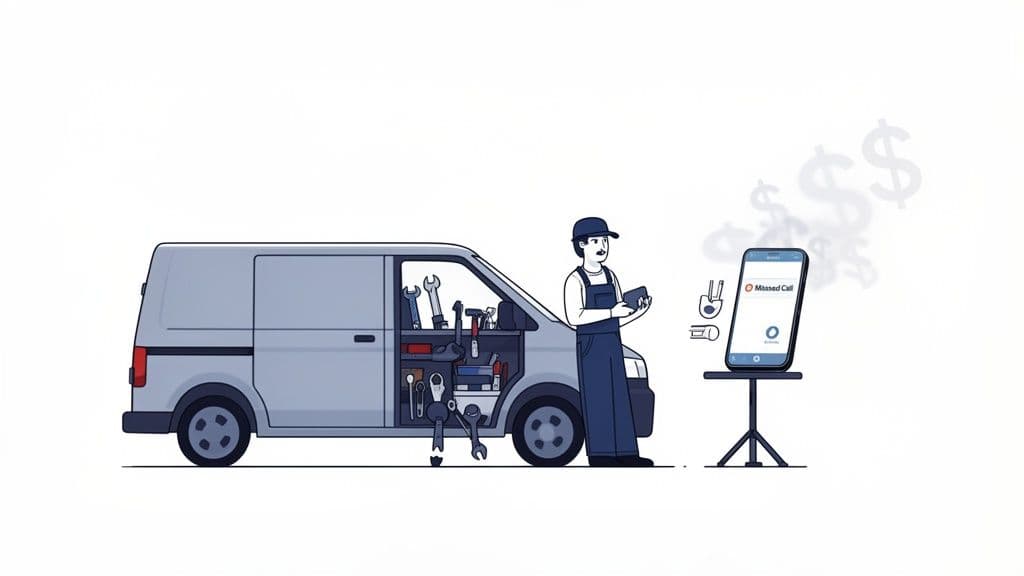
The Real Cost of One Missed Call
Let's be clear. You are a plumber working on a hard job. Your hands are dirty. Your phone rings, but you can't grab it. You think you will call back in an hour.
But the caller had a burst pipe. By the time you are free, they have already called other plumbers. They hired the first one who answered. You didn't just miss a call. You lost a job that could have been worth $500 or more. This happens every day to contractors like you.
Answering your phone is not just polite. It's how you get leads. The pro who answers first almost always gets the job.
How a Virtual Receptionist Changes Things
A virtual receptionist service makes your one-person shop sound like a big, professional company. It gives you a big advantage.
Here is how it helps you stop losing money:
- Look Professional: A real, friendly person answers every time. This makes a great first impression. No more rushed greetings from a loud job site.
- Never Miss a Lead: Every call is a chance to get a new job. It could be a new quote, a repair, or a simple question.
- Focus on Your Work: You get to stay on the tools and do what you do best. You know your calls are being handled.
This is not just a nice service to have. The virtual receptionist market is growing fast. Small businesses see that it's worth the money. The market is set to grow from USD 9,694.57 million in 2026 to over USD 17,105.92 million by 2035.
And it is easy to see why. Over 58% of small businesses already use these services to save money and run better. A cheap virtual receptionist is not just another bill. It is an investment that pays for itself by catching the jobs you were missing.
How Virtual Receptionist Prices Work
Trying to figure out what a virtual receptionist will cost can be confusing. The goal is not just to find the cheapest service. You want an affordable virtual receptionist that gives you real value for how your business works.
Most services have two main price models. You either pay for the time they spend on the phone, or you pay for a certain number of calls. Both can be good for a home-service business. Your phone might be quiet one day and very busy the next.
Pay-Per-Minute Plans
This is just what it sounds like. You buy a set number of minutes each month. Every second the receptionist is on the phone counts. This includes talking and hold time.
This can be a great deal if most of your calls are short. Think of a locksmith who gets quick "I'm locked out" calls. Those are fast, so the minutes last a long time. But if you build custom decks and get long calls, you could use up your minutes fast.
Per-Call or Monthly Plans
Other companies charge a flat fee each month. This fee covers a set number of calls, or maybe unlimited calls. This gives you a bill that is the same every month. That makes it easy to plan your budget.
An electrician who gets a lot of similar calls would do well with this plan. You know what your bill will be, no matter how long the calls are. You don't have to rush customers off the phone.
The right price plan depends on your calls. A roofer who gets tons of calls after a big storm might want a per-call plan. An HVAC company with steady work all year is a good fit for a monthly plan.
This chart shows the common price plans to help you see the difference.
Virtual Receptionist Prices Compared
| Price Plan | How It Works | Best For | What to Watch For |
|---|---|---|---|
| Pay-Per-Minute | You buy a block of minutes each month (e.g., 100 minutes/month). All call time is used from this block. | Businesses with very short, simple calls (e.g., booking jobs, emergencies). | Can get pricey if your calls are long. You might have to pay extra if you go over your minutes. |
| Pay-Per-Call | You pay a flat rate for a set number of calls per month. The call length does not matter. | Businesses with a steady number of calls, but the calls have different lengths. Good for finding new leads. | You pay for every call, even wrong numbers or spam, unless the service filters them out. |
| Monthly Plan | A flat fee each month for a lot of or "unlimited" calls and/or minutes. | Busy businesses that want the same bill each month and don't want to worry about limits. | Can be the most expensive plan. You might pay for more than you use. |
Seeing it like this makes it easier to choose. But there's one more thing to look for.
Watch Out for Hidden Fees
A plan that looks cheap can get expensive with extra fees. When looking at how virtual receptionist pricing is set up, it's good to know about reliable low cost transcription services, as this can change the total cost.
Always ask about extra fees before you sign up.
Here are the most common ones:
- Booking Jobs: Some services charge a fee every time they book a job for you.
- Call Transfers: If a receptionist connects a call to your cell phone, that might cost extra.
- After-Hours Help: Getting help 24/7 is great, but it often costs more than normal 9-to-5 service.
- Software Links: There might be a fee to link the service to your customer software.
These services are popular for a reason. They solve a real problem for small businesses. The global market was valued at USD 1.5 billion in 2024 and is expected to hit USD 3.2 billion by 2033.
You can find plans from around $292 per month for 30 calls** to **$385 per month for 100 minutes. Good call help is not out of reach. Once you know the price plans and what to ask, you can pick a partner that fits your budget and helps you grow.
Picking the Right Service for Your Business
Finding the right answering service is not about getting the cheapest plan. As a contractor, you need a partner who understands your work. A worried call about a busted pipe is very different from a simple question. Your virtual receptionist has to know the difference right away.
Many services are out there, but most are for general businesses. They might be great for a doctor's office, but they don't know your business. You want a service that feels like part of your team. They should be ready to handle calls about a leaky roof or a broken furnace at any time.
Must-Have Features for Contractors
When you look for an affordable virtual receptionist, keep a simple list with you. These are the things that will really help your business.
Your list should include:
- 24/7 Help: A flooded basement can happen at 2 a.m. on a Sunday. You need someone answering the phone all the time so you never miss a big emergency job.
- Bilingual Help: If you serve people who speak Spanish, having help in both English and Spanish can bring in a lot more customers. It makes your company feel more open to everyone.
- Knows Your Industry: The receptionists don't need to be expert plumbers. But they should know a little about home services. This helps them ask the right questions and sound like they know what they are talking about.
Live People vs. AI Robots
You have two main choices: live human receptionists or AI robot callers. For a trade business, a human touch is almost always better. When a customer is stressed about a problem at home, a calm, kind human voice builds trust right away.
An AI robot can handle simple things, like "What are your hours?" But a live person can handle a hard question. They can calm down a worried homeowner. And they can know when a problem is serious enough to call you right away. The best call handling service often uses both the speed of robots and the smarts of a real person.
A customer with a flooded basement does not want to talk to a robot. They want help from a real person who can get them help, fast. That first impression can be the difference between getting a big job and losing it.
Smart Questions to Ask
Before you sign up, act like you are hiring a new team member. You are hiring a partner to be the voice of your business. How they answer these questions will tell you a lot.
Here are a few good questions to ask:
- How do you train your team to handle a real emergency, like a gas leak?
- Can you connect to my scheduling software, like Jobber or Housecall Pro?
- How do you check if a new caller is a serious lead before booking a visit?
- Are your receptionists in the U.S.? Do they have experience with home service calls?
This market is growing fast for a reason. It was valued at USD 1.5 billion in 2024. This growth is because these services can cut costs by up to 70% compared to hiring a full-time person. You get great support without the high cost. You can find more details about the virtual receptionist market on datainsightsmarket.com.
Setting Up Your Virtual Receptionist for Success
Once you pick a service, the setup is very important. A little time spent now will make the service a big help for your business. The goal is to make your new affordable virtual receptionist sound like they have been answering your calls for years.
The tech part is usually easy. Most services make it simple to forward your business number. You just change a setting with your phone company to send all calls to your new team. They will help you do it.
Writing Call Scripts That Work
The real key to a great setup is information. You need to give your receptionists a good call script. This is not about making them sound like robots. It is about giving them a "cheat sheet" so they can answer questions well.
Think about the questions you answer all the time. Your script should cover the basics so the receptionist can handle the call without bothering you.
Think about things like:
- What are your exact business hours?
- What services do you offer? (e.g., "Do you work on big buildings or just houses?")
- Where do you work? Be clear with towns or zip codes.
- Do you offer emergency help? What does that mean for a caller?
- How do you schedule a visit for a price quote?
Writing down clear, simple answers to these questions helps your receptionist be truly helpful. This frees you up to do your real work.
This flowchart shows the whole process, from figuring out what you need to finding the right partner.
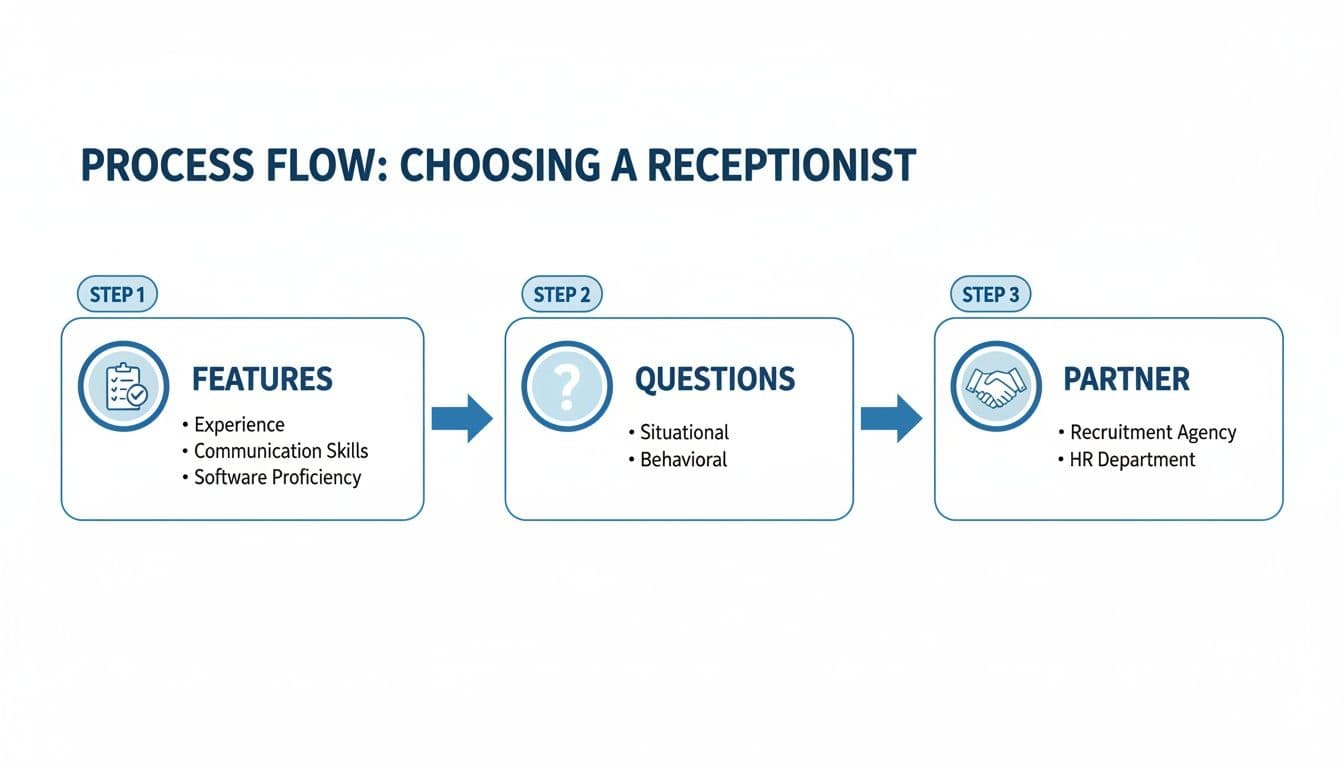
As you can see, a good setup starts with knowing what your business really needs.
Before you start writing, it helps to have a list of key details your receptionist will need. This table covers the information they must have to handle every call well.
Key Call Script List
| Information Type | Example Questions to Answer | Why It's Important |
|---|---|---|
| Business Basics | What is the full business name? What are the hours? What is the service area? | This is the base for every call. It stops simple mistakes and saves time. |
| Services Offered | What do you do and not do? Do you work on homes, businesses, or both? | Helps the receptionist filter calls and not book jobs you can't do. |
| Prices & Quotes | Is there a fee for a service call? How are quotes scheduled? | This sets customer expectations from the start. |
| Emergency Plan | What is an emergency? Who should be called and how (text, call)? | This is key for handling big, urgent jobs quickly and well. |
| Scheduling | What's the best way to book a job? What info do you need to book it? | This makes sure jobs get on your calendar smoothly. |
Having these answers ready makes it easy to write a script. It also gives your virtual receptionist the confidence to sound like a long-time worker.
Finding Good Leads
Besides answering basic questions, your receptionist can also help you avoid wasting time. You can set up a few simple questions to help them find the real leads.
For example, an HVAC contractor could have their receptionist ask:
- Are you looking for a repair, a new system, or just a check-up?
- Has anyone else looked at it yet?
- Is this for your home or a business?
The answers tell them what to do next. A broken AC in July is a big job. The receptionist should get all the details and let you know right away. A call for a check-up can be scheduled with less hurry.
Pro Tip: Don't just give them facts. Give them clear rules. For example: "If a caller says they have a big water leak, get their name and address. Tell them I will call back in 15 minutes. Then, text my cell phone right away with the word URGENT and the caller's info."
Don't Forget Your Google Business Profile
Here is one last, important step. Make sure the phone number on your Google Business Profile is the one that goes to your virtual receptionist. Many of your best leads come from someone searching "plumber near me" on their phone.
When they tap that call button, you want it to ring to your receptionist, not your voicemail. This one small change helps you get every lead from local search. It turns your online page into a job-booking machine.
Measuring the Value of Your Answering Service
So, you have a virtual receptionist, and your calls are being handled well. That's great. But is it actually making you money? Figuring out if it's worth it does not have to be hard. It just comes down to a few simple numbers.
The easiest way to see the change is to look at your business before and after. Just look at your calendar. Are you booking more jobs? A quick check of booked jobs per month before you signed up versus now is often all you need.
If you were doing 15 jobs a month by yourself and now you are doing 25, that answering service is worth the money.
Looking at Your Call Reports
Your virtual receptionist service should send you regular call reports. Don't just look at them and put them away. These reports are full of good information. They tell you when people are calling, what they need, and where your best leads come from.
You might find some surprises. For example, maybe you get a lot of calls every Saturday morning. That's great to know! It tells you when your customers are ready to hire you.
You can also use these reports to find new business. Let's say you are a painter. You see in the reports that 15 people called last month asking about painting kitchen cabinets. Maybe that is a service you offer but don't advertise much. The market is telling you to update your website and start advertising that service more.
Think of your call reports as a way to hear from your customers. They tell you what services people want and where you should spend your marketing money.
Making Your Service Better
The information from your reports is not just about the past. It is your guide for the future. Use what you learn to change your call scripts and the rules you give your receptionists. This is how your service gets smarter and better over time.
Here are a few ways to use that information:
- Improve Your FAQ: Do you see the same questions in the reports all the time? Add the answers to your receptionist's script. This lets them solve more problems on the first call.
- Check Your Area: Are you getting calls from people too far away? Change your script so the first thing the receptionist does is ask for the caller's zip code. This saves everyone time.
- Track Your Ads: When you run a new ad, have your receptionist ask callers how they heard about you. For any small business, knowing what's working is very important, especially when you learn how to calculate marketing ROI.
By checking your call information and making these small, smart changes, your answering service becomes more than just a tool. It becomes a key part of how your business grows.
Common Questions About Virtual Receptionists
Even after seeing all the good things, you might still have a few questions before you hire an affordable virtual receptionist. I find that most contractors have the same few worries about how it will really work for their business.
Let's answer the most common ones so you can feel good about your choice.
Can a Virtual Receptionist Use My Scheduling Software?
Yes, almost for sure. This is one of the most important things to look for. Good virtual receptionist services are made to work with the software you already use, like Jobber, Housecall Pro, or ServiceTitan. Just make sure to ask if they work with your software before you sign up.
What if they don't? No problem. Almost every service can use a shared calendar, like Google Calendar. They book the job, it shows up on your schedule, and you are all set. It keeps things simple.
What Happens When a Caller Asks a Hard Question?
A good virtual receptionist knows their job is to get the lead, not to act like an expert plumber or HVAC tech. They know how to handle these moments well.
When a customer asks a very technical question, the receptionist will just say that an expert—that's you—is the best person to answer. They will write down the customer's question and contact info. Then they will send it to you by text or email. This way, the customer feels heard and you have what you need to call them back with the right information.
The real goal is to make every caller feel taken care of, even when the receptionist can't answer a hard question. A smooth handoff to you is a key part of what makes the service so helpful.
How Long Does It Take to Get Set Up?
You will be surprised at how fast it is. Most of the time, you can be ready to go in just a day or two.
The steps are simple: you pick your plan, give them some basic info about your business (hours, service area, etc.), and work with them on a simple call script. The best companies have people and examples to make it easy. This means you can have your new receptionist answering calls and booking jobs very quickly.
If you want to learn more, you can read about what a virtual receptionist is and how they help a business.
Is a Live Person Really Better Than a Robot Menu?
For a home service business? Yes, 100% yes.
Think about it. When someone's basement is flooding or their AC breaks in July, the last thing they want is to deal with a "press 1 for sales" robot menu. They are stressed and need help now.
Hearing a real, friendly human voice on the phone builds trust right away. It shows you are a professional company that cares. That one human connection is often the reason they book with you instead of just hanging up and calling the next person on the list.
Ready to Never Miss a Call?
7 days. Cancel anytime.
Let Cira answer your calls and book jobs while you work.