Mastering B2B Appointment Setting for Strong Growth
Think of B2B appointment setting as the handshake that happens before a sales talk begins. It's how you find the right business customers and set up meetings for your sales team to talk to them.
This isn't just making cold calls. It's the engine that turns a list of names into a full calendar of great meetings.
What B2B Appointment Setting Really Is
Imagine you own a roofing company. Your team is great, but they can't fix a roof if they're not there. B2B appointment setting is the work you do to find building owners who need your help. The goal is simple: get a meeting on the calendar so your experts can talk to them.
It’s a clear plan for getting a steady flow of sales meetings. Your best salespeople can stop looking for people to call. Instead, they can talk to businesses that are already interested. They get to do what they do best: make sales.
Why It Matters for Your Business
A good appointment setting plan does more than fill your calendar. It helps your business grow in a steady way. It makes sure your sales team is focused and not wasting time.
Here's what it really does for you:
- Makes Sales Predictable: No more guessing. You know how many meetings are coming up. This makes it easier to guess how much money you will make.
- Saves Time: Your best people can stop making endless calls. They can focus their energy on important talks with people who are truly interested.
- Helps Your Sales Team Do Better: When your sales team talks to the right people, they make more sales. They are talking to people who have a real problem you can fix.
- Builds Your Brand: Every time you talk to a business, they learn your name. This happens even if you don't get a meeting.
The main idea is simple: Find the right companies that need what you sell. Then, set up a time for them to talk to your experts. You’re turning random calls into a strong system for growth.
The People Who Do the Work
Setting appointments is usually a team effort. You might handle it in your company or get outside help. You could have a team of appointment setters or just one person. Sometimes, businesses hire a professional answering service company to make sure every call is answered and checked.
No matter who does it, the goal is the same: to start the conversation. Their job is to find a real need and get a "yes" for a follow-up meeting.
This lets your main sales reps—the "closers"—step in when the person is ready to talk about the details. Splitting the work this way makes the whole sales process run better.
For any service business, this is a must-have. It makes sure your marketing money creates real sales chances, not just clicks. By mastering B2B appointment setting, you build an engine that helps your company grow, one meeting at a time.
Your Plan for Setting B2B Appointments
A good B2B appointment setting process is like a good recipe. When you follow the steps, you get the same great results every time. It turns a messy task into a clear plan your team can use to fill the sales calendar.
This plan breaks down the whole journey. It starts with finding who to talk to and ends with booking that first meeting. Think of it as a step-by-step guide for creating a steady flow of good talks for your business.
At its core, the process is simple. You find the right people, connect with them, and then meet to talk about how you can help.
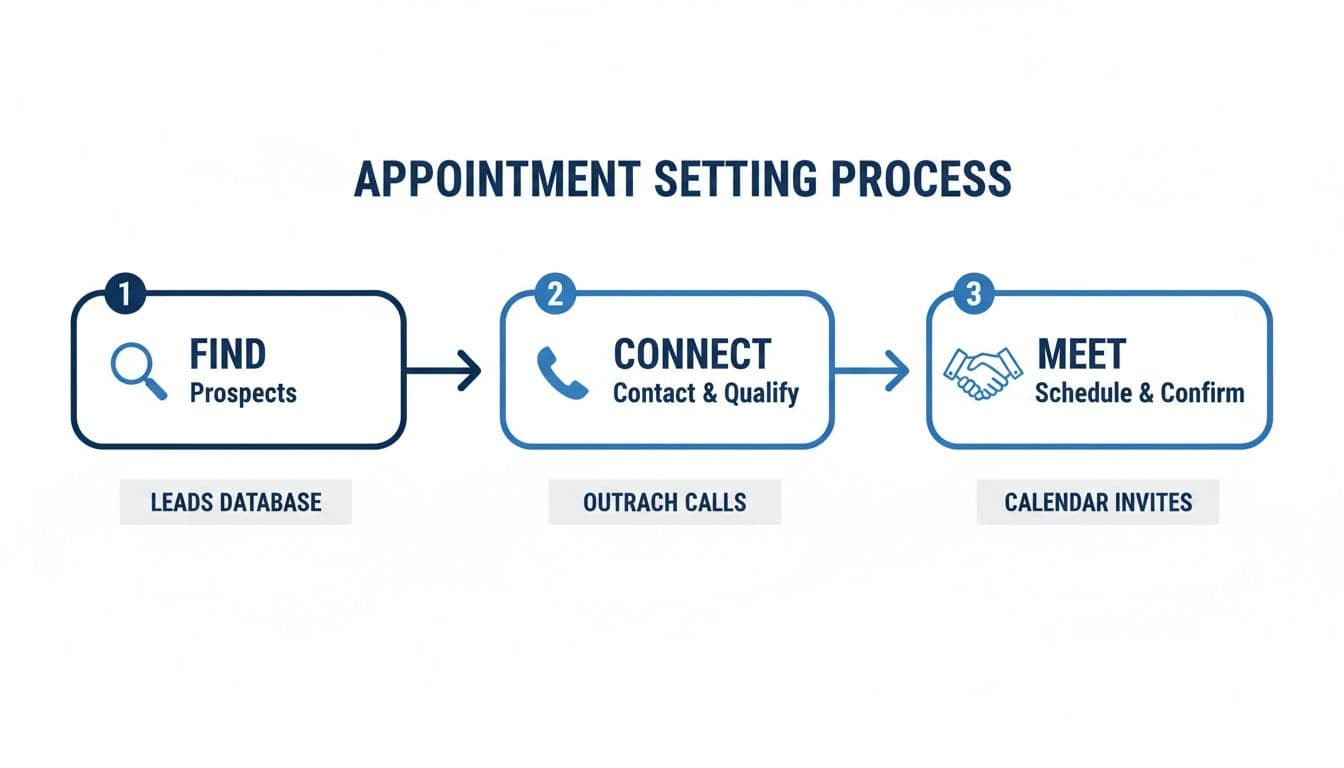
The key is to know that each step builds on the last. This creates a smooth path from a stranger to a sales call on the calendar.
Step 1: Find Your Ideal Customer
Before you reach out, you need to know who you're looking for. This first step is about making an Ideal Customer Profile (ICP). Think of it as a very clear picture of the perfect company for you.
For example, if you run a cleaning company, your ICP might be an office manager at a medium-sized tech company in your town. If you are a marketing company, maybe it's the head of marketing at a local car dealer.
Getting this right is very important. A clear ICP helps you focus on businesses that are a good fit. That way, you stop wasting time on the wrong ones.
Step 2: Build Your Contact List
Now you know who you are looking for. So, where do you find them? This step is about making a good list of contacts who match your ICP. It’s like making a guest list for a party. You only invite people you know will have a good time.
You can find these contacts in a few places:
- LinkedIn: This is a great place to look. You can search for job titles and companies that fit your profile.
- Industry Lists: Look at groups for certain jobs or local business lists.
- Your Own Network: Don't forget the people you already know. Sometimes the best leads are right in front of you.
The goal is simple: get names, companies, job titles, and correct contact info. A clean, focused list is the base for everything you do next.
Step 3: Write Your Message
With your list ready, it's time to start talking. Your first message is your first impression. You want it to be helpful, not pushy. Whether you send an email or make a call, keep your message simple. Focus on them, not you.
Instead of a sales pitch, start with a problem they might have that you can solve. For example, a roofer might say, "I help building managers avoid surprise repair costs with roof checks." This shows your value right away.
Keep it short. Your only goal right now is to get them interested enough to agree to a short chat.
Key Takeaway: Always try to make your message personal. Using their company name or talking about their industry shows you did your homework. It proves you are not just sending the same message to everyone.
Step 4: Follow Up and Don't Give Up
Here’s a hard truth: most people won’t reply to your first message. That's normal. This is where the real work happens. The secret to B2B appointment setting is in the follow-up. You need to keep trying without being annoying.
The facts show this works. A huge 80% of meetings are set only after five or more tries. But almost half of all reps give up after just one try. Even better, using a mix of three or four ways to reach out—like email, phone, and LinkedIn—can lead to 28% more success. You can learn more with a strategic guide on multi-touch outreach.
A smart follow-up plan spaces your messages out over a few weeks and uses different ways to connect. This keeps you on their mind and greatly raises your chances of getting a "yes" when the time is right.
How to Check Leads Without Wasting Time
Let’s be honest: just because you’re talking to someone doesn’t mean they’re ready to buy. This is a key lesson in B to B appointment setting. Your real job isn't to book a meeting with everyone. It's to book meetings with the right people. This sorting process is called lead qualification.
Think of yourself as a detective. You're looking for clues to see if someone is a hot lead or just looking around. Pushing leads that aren't ready to your sales team wastes their time and energy. In fact, studies show that 79% of marketing leads never turn into a sale, often because they were not a good fit.
To stop wasting effort, you first need to be clear on defining what a qualified lead truly means for your business. When everyone on your team agrees, the whole process works better.
Four Simple Questions for Checking Leads
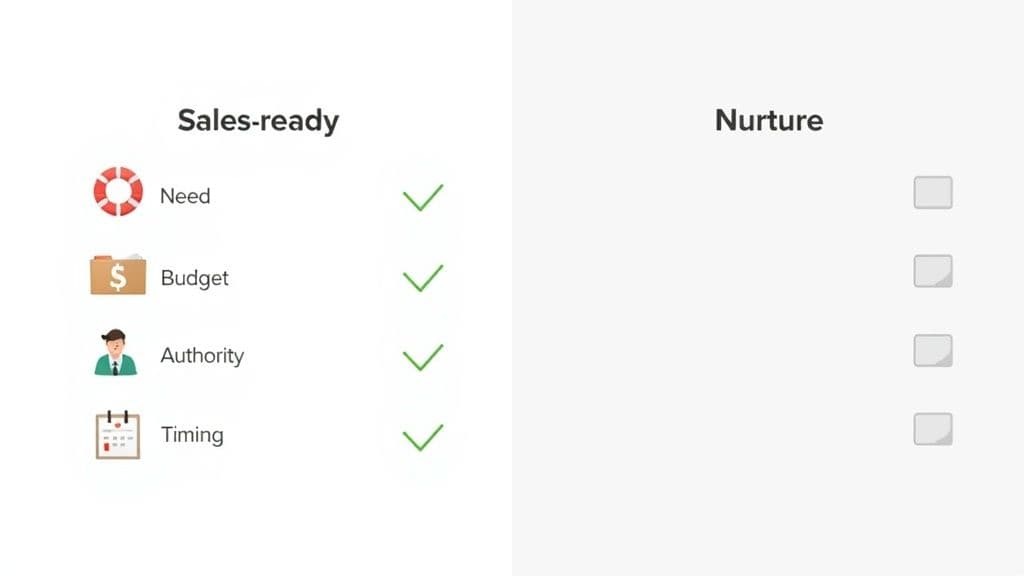
You don't need a complex system. Most of the best ways to check leads come down to four simple questions.
Let's break them down into easy questions you can ask in any call.
1. Do They Have a Problem You Can Solve? (Need) This is the most important question. If they don't have a problem that your service fixes, there is no reason for them to buy. It's that simple.
- A gentle way to ask: "What are some of the biggest problems you have with [their area of work] right now?"
2. Can They Afford Your Help? (Budget) A person might love your service, but if they don't have the money, it's just a dream. You don't need to see their bank account. Just gently check if they have money set aside.
- A gentle way to ask: "Have you set aside money to solve this kind of problem this year?"
3. Are You Talking to the Boss? (Authority) You could be having a great talk, but if it's with someone who can't say "yes," you're not getting closer to a sale. You need to find the person who can sign the check.
- A gentle way to ask: "Besides you, who else on the team helps make a decision like this?"
4. Is the Timing Right for Them? (Timeline) Sometimes, a lead is a perfect match, but they won't buy for six months. That's okay! It's important to know their timeline so you can follow up at the right time instead of pushing now.
- A gentle way to ask: "If everything looked good, when would you want to have a solution ready?"
Pro Tip: Remember, this is not a test. The goal is to ask these questions as part of a normal talk. Listen more than you talk. You'll find that people are happy to share this info when they feel you are listening.
Spotting Good Leads from Bad Leads
As you get answers to these questions, it becomes clear who is ready for a sales meeting and who needs more time.
The table below gives you a quick look at what to look for. It helps you separate the "ready-to-go" leads from the "not-yet" ones.
Qualified Lead vs Unqualified Lead
| Trait | Qualified Lead (Ready for a Meeting) | Unqualified Lead (Needs More Time) |
|---|---|---|
| Problem | They know and can explain the problem they are facing. | They are not sure if they have a problem or can't describe it. |
| Budget | They have a budget or a clear way to get one. | They have no money set aside and no clear way to get it. |
| Authority | You are talking to the person who makes the final choice. | You are talking to someone who only gathers information. |
| Timing | They have a clear timeline and want to find a fix soon (like this quarter). | They have no set timeline and are "just looking" for later. |
Using this simple guide will make your B to B appointment setting much better. Your sales team will thank you for sending them into talks that have a real chance of closing.
The Right Tools for Your Appointment Setting Kit
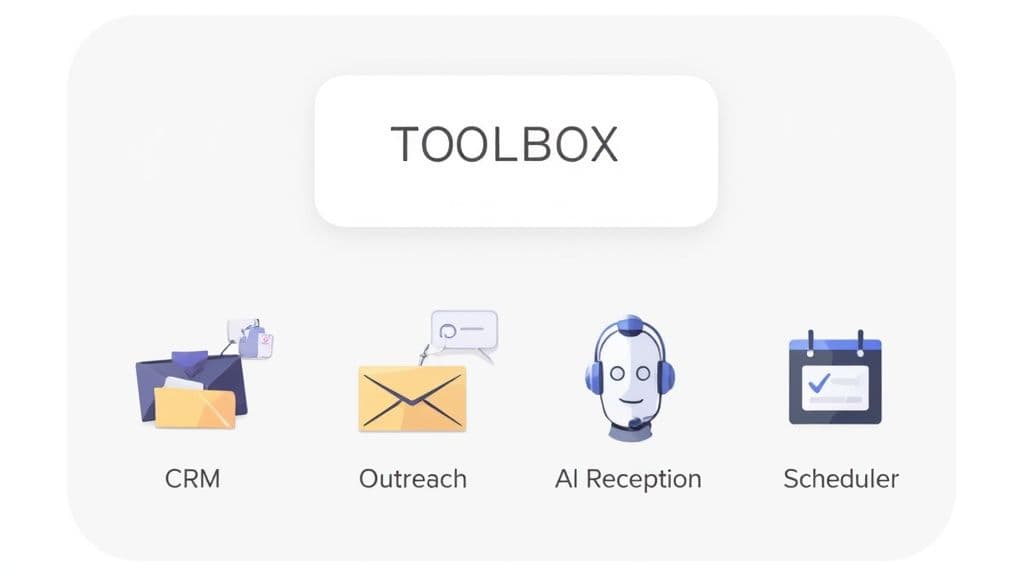
The right tools can turn B to B appointment setting from a hard job into a smooth, easy one. You don't need to spend a lot of money or use a complex system. A few smart tools are all you need to stay organized and talk to more customers.
Think of it like this: you wouldn't build a house with only a hammer. You need a full toolkit. The same is true for booking meetings. The right tools help you work smarter, not harder.
Customer Relationship Management (CRM)
A Customer Relationship Management (CRM) tool is the main hub for all your sales work. It’s like a smart address book that keeps all your customer info in one clean place.
Forget about sticky notes and messy papers. A CRM tracks every talk—every call, email, and note. It remembers who you talked to, what you talked about, and when to follow up. This system is your safety net, making sure no person is ever forgotten.
- Keeps You Organized: See a full history of your talks with a person in one place.
- Saves Time: No more searching through old emails. All the contact info and notes are right there.
- Helps You Follow Up: Set reminders so you always know when to reach out again.
For any business that wants to grow, a good CRM is a must-have.
Smart Outreach and Scheduling Tools
Once you have your contacts in a CRM, you need a way to reach out to them well. Smart outreach tools let you send personal emails. You can see who opens them and clicks your links. This helps you see which people are really interested.
Then comes the easy part. When a person agrees to a meeting, a scheduling tool takes over. The long email chain of "Does Tuesday at 2 work?" is gone. You just send them a link to your calendar. They pick a time that works for them, and the meeting is automatically on both your calendars.
These tools do the hard work for you. They handle the boring tasks that take up a lot of time. This lets you focus on what really matters: building good relationships with customers.
This simple mix of outreach and scheduling makes the whole process faster and more professional for everyone.
The Modern Phone: An AI Voice Receptionist
So, what happens when a great lead calls you back, but you’re busy? For most small businesses, that call goes to voicemail. That is often where good chances are lost. This is where an AI voice receptionist can be your best helper.
An AI receptionist, like Cira, is like having a perfect front-desk person working 24/7. It answers every single call in a professional, human-like voice. This means you never miss a chance to connect. But it does more than just answer. It can answer common questions, check if callers are a good fit, and even text them your link to book a meeting right away. If you want to know more, we have a guide on what a virtual receptionist is and how it can help.
This isn't just about answering the phone. It's about turning every call into a good talk. It helps you get leads even when you’re busy. It makes things easy for your clients and helps you book more jobs without any extra work.
So, how do you know if your appointment setting is working?
It’s one thing to be busy making calls and sending emails. It’s another thing to know if that work is actually helping your business. You can't fix what you don't measure. In B to B appointment setting, a few key numbers tell the real story of your success.
Tracking the right numbers is the difference between guessing and knowing. It shows you what’s working and what’s not. This lets you make smart changes that lead to more good meetings.
Your Most Important Numbers
You don’t need a complex chart to see how you are doing. A few main numbers will give you a clear look at how well your appointment setting is working. Think of these as the vital signs for your sales plan.
Here are the key numbers you need to watch:
- Connection Rate: This is simple. What percentage of people you try to contact actually answer? This tells you a lot about your contact list and if you’re calling at the right times.
- Appointment Set Rate: Of the people you talk to, how many agree to a meeting? This number shows how good your script and your message are.
- Show Rate: This is a big one. For every meeting you book, how many people actually show up? A low show rate can be a quiet problem that wastes your sales team's time.
The final goal is a confirmed meeting. This is the heart of successful B2B appointment booking. Watching these numbers closely is how you get there all the time.
Why No-Shows Hurt So Much
Booking a meeting feels like a win. But it doesn't mean anything if the person doesn't show up. An empty spot on the calendar is not just a missed chance. It's a waste of your sales team's most important thing: their time.
Sadly, no-shows and last-minute changes are very common. Numbers show that about 34% of B2B meetings end up this way. That’s a huge number that can make getting a new customer very expensive. This is why tracking your show rate is so important.
A high no-show rate is often a sign of a bigger problem. It might mean your leads were not a good fit. Or maybe the value of the meeting was not explained well. It’s a red flag telling you to look closer at your process.
Using Numbers to Get Better Results
Once you start tracking these numbers, good things happen. The numbers don't just give you a score. They give you a map for getting better. They tell you why things are happening.
For example:
- Low Connection Rate? Your contact list might be old. Or maybe you're calling when everyone’s in a meeting. Try cleaning up your list or calling at different times of the day.
- Low Appointment Set Rate? Your opening line might not be getting their attention. This is a perfect chance to test two different scripts to see which one works better.
- Low Show Rate? The person might not feel the meeting is important enough. You can fix this with automatic reminders, sending a clear plan for the meeting, or a quick call the day before.
By paying attention to these simple numbers, you can find weak spots in your B to B appointment setting plan. Then you can make fixes that really help. This data-first way helps you turn more of your talks into real sales chances. And if you're looking for ways to automate those reminders, check out how tools like Cira can help. You can see Cira’s features to see how automatic follow-ups can really improve your show rate.
Common Appointment Setting Mistakes to Avoid
We’ve all made mistakes. Even the best appointment setters made some errors when they were starting out. In B2B appointment setting, a few common slip-ups can cost you time and chances. The good news? Once you know what they are, they're easy to avoid.
Think of it like a cheat sheet that shows you all the wrong turns on a map. By learning from these common mistakes now, you can build a strong plan from the start. This saves you a lot of stress and helps you book more meetings.
Giving Up Too Soon
This is the biggest mistake I see: giving up after just one or two tries. The hard truth is that the people you call are busy. They won't drop everything for your first email or call. If you quit too early, you're missing out on a lot of possible meetings.
Not giving up is key in this game. Seriously. There's a reason why a huge 79% of marketing leads never turn into sales. It's usually because no one followed up the right way. Having a real follow-up plan with many tries across different channels (phone, email, maybe even LinkedIn) is what makes a pro stand out. It greatly raises your odds of reaching someone at just the right time.
Using the Same Script for Everyone
Sending the exact same message to everyone on your list is a big mistake. People can spot a copy-paste message from a mile away, and it’s a turn-off. It feels like spam and tells them you did not even do a little bit of research.
Here's a classic example of what not to do: "Hi, my name is Alex and I sell marketing services. Are you free for a 15-minute call next week to learn how we can help you grow your business?"
See the problem? This message is all about "me, me, me." It offers nothing of value to the person reading it and gives them no reason to reply.
Not Doing Your Homework
This mistake is tied to the last one. Reaching out without learning about the person first is a bad idea. Before you hit "send" or dial a number, you need to know the basics about their company and what they do. A quick look at their website and LinkedIn page is the least you should do.
This little bit of prep work lets you make your message personal. It shows you understand their world. An email that mentions a recent company success or a problem in their industry will always do better than a generic one.
Now, here’s a much better, personal approach: "Hi Sarah, I saw your company just launched a new green product line—congrats! I help businesses like yours get press for launches like this. Would you be open to a brief chat about your goals?"
This way of talking builds a connection right away. It feels like you care, not like you're just trying to sell something.
B2B Appointment Setting: Your Questions Answered
If you're new to b to b appointment setting, you probably have questions. Let's go over the most common ones business owners ask. We'll give you the straight answers you need to choose what's right for your company.
How Much Does It Cost to Hire Someone to Set Appointments?
This is usually the first thing people want to know. The honest answer? It depends. Think about it this way: booking a meeting with a top boss at a big company is much harder than setting up time with a manager. The person you want to meet sets the price.
In general, you can expect one good meeting to cost between $350 and $1,700. For most small and medium-sized businesses, the cost is usually between $550 and $1,000 per meeting. If you want to learn more about the numbers, this guide on 2025 pricing models is a great place to start.
Should I Build My Own Team or Hire a Company?
This is a common choice for a growing business. There's no single "right" answer. The best path depends on your company's money, time, and how much control you want.
Here’s a simple way to think about the options:
- Your Own Team: You have total control. You pick the people, teach them about your brand, and manage everything. But, you have to pay for everything: salaries, benefits, tools, and the time it takes to manage them.
- Hired Company: You are plugging into a system that is already working. A good company brings its own team, tools, and proven plans from day one. This almost always gets you good meetings faster and with less stress.
Key Insight: Hiring a company is often the fastest way to get more sales leads. Pro companies often report that they can grow a company's sales leads by 40–60% more than a new team that is still learning.
How Long Does It Take to See Results?
I know you want meetings on the calendar now, but this doesn't happen overnight. But you shouldn't have to wait for months, either. You can expect to see the first good meetings show up in the first few weeks.
A good company will spend the first week or two just learning about your business, your ideal customer, and building a good outreach list. Once that work is done, they start reaching out.
Building up speed is key here. The first month is usually for testing and improving the plan. By the second and third months, you should see a steady flow of meetings as the team gets into a rhythm. It's a marathon, not a sprint. Focus on the quality of those early meetings, and the number of meetings will grow.
Ready to Never Miss a Call?
7 days. Cancel anytime.
Let Cira answer your calls and book jobs while you work.