How to Qualify Sales Leads and Focus on Winning Jobs

When you run a home service business, every phone call can seem like a new job. But how many of those calls go nowhere? You know the ones: people just looking for the lowest price, or others who are not ready to hire anyone.
It can be a pain. This is where qualifying sales leads helps. It is a simple way to find out which callers are a good fit for your business before you spend time on them. Think of it like a filter that separates serious buyers from people just looking around.
Stop Chasing Every Call and Start Closing More Jobs
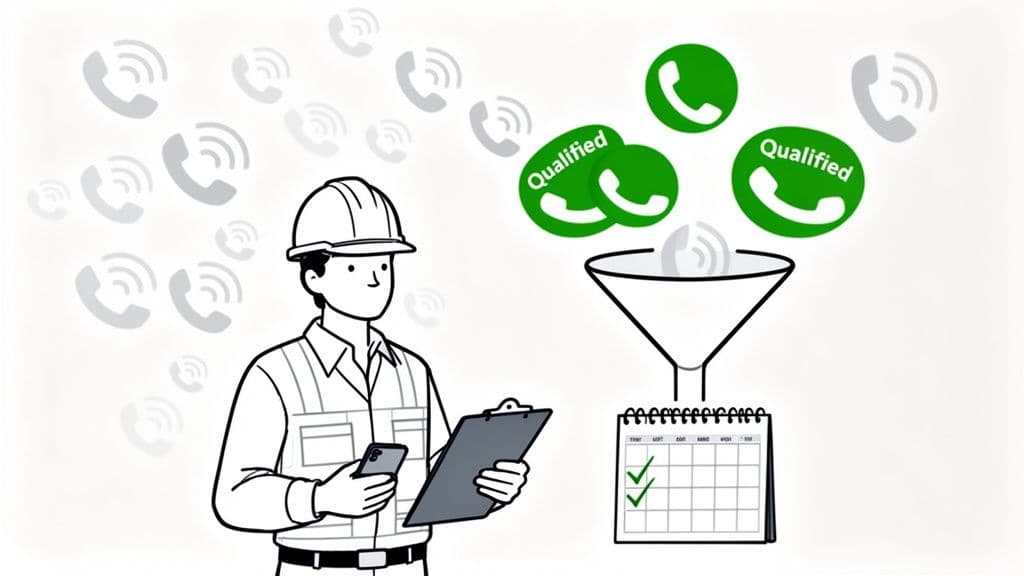
The secret to a full schedule is not answering more calls. It’s about asking the right questions on the calls you get. This is called lead qualification. It is your best way to avoid tire-kickers and people who waste your time.
This guide is for busy contractors who need to work smarter, not harder.
Why Every Unqualified Lead Costs You Money
Chasing every person who calls feels like you are being busy, but it is a hidden cost.
Every minute you spend on the phone with someone who was never going to hire you is a minute you can't get back. Every trip you make to give a free estimate to a price-shopper costs you gas and time. These are the things that keep your business running.
Learning how to qualify leads is all about protecting your time and money. It’s a big change from thinking "every lead is a good lead" to "every qualified lead is a great chance." That small change can make a huge difference to your profits.
The main idea is simple: Not all leads are the same. By learning to spot the good ones early, you can spend your energy on customers who are serious about hiring you.
What You Will Learn in This Guide
Forget the hard sales words. This guide is all about simple steps you can use today. We will show you exactly how to qualify your leads so you can stop wasting time and start booking more of the right jobs.
Here’s a quick look at what we'll cover:
- Simple ways to quickly spot a good lead.
- Questions you can use on the phone or in a text.
- A lead scoring system to help you know which leads are best.
- Tools that can qualify callers for you, even when you're busy.
Use Simple Frameworks to Spot a High-Quality Lead
You don’t need a fancy sales degree to tell a great lead from a time-waster. The secret is to use a simple checklist in your head. This helps you guide talks and see if a caller is serious.
One of the best-known ways is BANT. It’s a simple word that stands for Budget, Authority, Need, and Timeline. By asking a few smart questions about these four things, you can learn all you need to know in just a few minutes.
What is the BANT Framework?
Think of BANT as your map for the first five minutes of any call. Your goal is not to read from a script. It's to touch on each point to see if you and the customer are a good fit. It’s a friendly chat, not a test.
Of course, any plan works better when you know who your ideal customer is. If you have not done it yet, take time to create buyer personas. It makes finding the right clients much easier.
Getting this right from the start is a game-changer. A huge 67% of lost sales happen because leads were not qualified well at the start. But when you use a process like BANT, your success rate can jump from 11% on bad leads to over 40% on good ones.
A framework is not a strict script. Think of it as a guide. It makes sure you cover the most important things in every talk. This helps you focus on what really matters.
The BANT Framework for Home Service Businesses
Let's change BANT from sales talk into plain English questions you can use. Here’s a simple table showing how you can use this for a home service business.
| BANT Element | What It Means | Sample Questions to Ask |
|---|---|---|
| Budget | Can they afford the work? | "To make sure we're on the same page, do you need a standard repair, or are you looking at a higher-end option?" |
| Authority | Are you talking to the boss? | "Will you be the main person for this project, or is there anyone else we should talk to?" |
| Need | How much do they need your service? | "Can you tell me a bit more about the problem? How long has this been happening?" |
| Timeline | How soon do they want it done? | "Are you hoping to get this fixed this week, or are you just starting to plan?" |
By using these kinds of questions in your calls, you find out what you need to know fast. You’ll know right away who is ready to book and who is just looking. This lets you focus your energy where it counts.
The Best Questions to Ask on the Phone or by Text
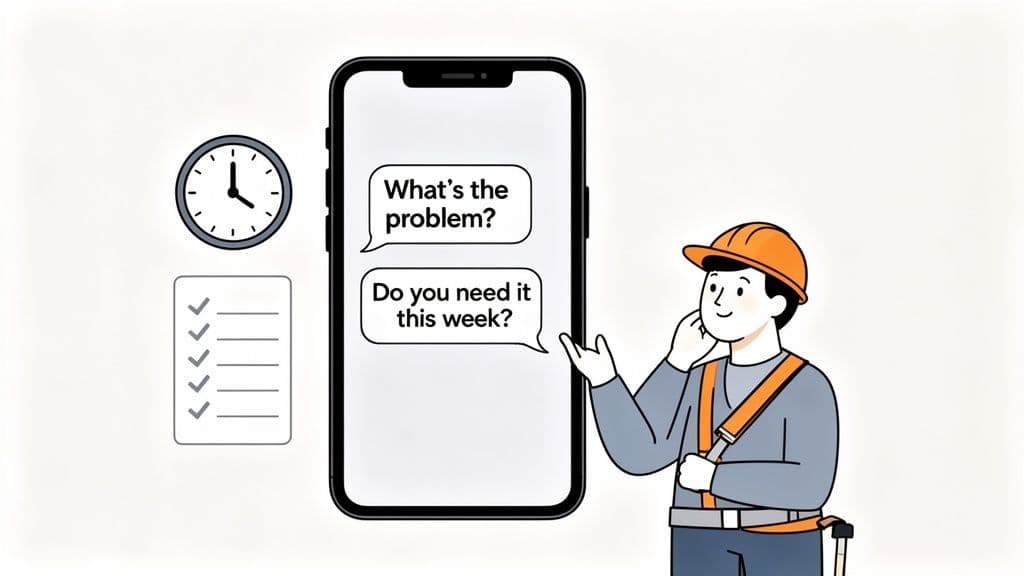
Knowing what to ask is the secret to getting the answers you need, fast. The right questions put you in control, whether you're on a call or sending a text. Your job is simple: politely find out what a lead needs, when they need it, and how serious they are.
This is not about being pushy. It's about being smart with your time. A few good questions can tell you if a lead is a good fit in minutes. This saves you from chasing dead ends for hours.
Starting the Conversation Right
How you start the talk sets the mood. You want to sound helpful and direct. You are there to solve a problem, not just make a sale.
Whether a customer calls you or you are calling them back, start with a simple, open question. This gets them talking about their problem right away.
Good opening questions to try:
- On the phone: "Thanks for calling! To help you best, could you tell me a little more about what's going on?"
- By text: "Hi [Name], I saw you need help with [service]. What problem are you trying to solve?"
These openers are friendly and get right to the point. They put the focus on the customer’s problem, which is where you want it. From there, you can ask for more details.
Finding Out Their Timeline and Urgency
Once you know their basic need, your next move is to find out their timeline. This is a big clue for how serious they are. Are they ready to hire now, or just getting quotes for a project months away?
You don't need to be blunt. You can use softer words to get the information.
A lead’s timeline is your best clue to how ready they are. Someone with a broken water heater needs help today. Someone planning a kitchen remodel for next year is different. Your questions help you tell them apart.
Try asking questions like these:
- "Are you hoping to get this fixed this week, or are you in the early planning stages?"
- "Is there a certain date you need this project done by?"
- "How quickly are you looking to decide on this?"
Listen closely to how they answer. Words like "as soon as possible" or "it just broke" are green lights. They tell you it's a hot lead who needs help now. On the other hand, answers like "just getting ideas" or "maybe next year" tell you this is a lower-priority lead.
Create a Simple Lead Scoring System That Works for You
Once you start asking the right questions, you need a quick way to sort the good leads from the bad ones. This is where lead scoring helps. It sounds harder than it is. It's just a simple way to rank callers so you know who to call back first.
Think of it like a game. You give points to a lead based on how they answer your questions. The higher their score, the better they are for your business. You don't need fancy software for this. A notepad or a simple spreadsheet works just fine.
Building Your Scoring System
The secret here is to keep it simple. Start by picking the top three or four things that point to a great customer for your business. For most home pros, that is usually how soon they need the work, the type of job, and where they are.
Next, give out some points. A lead with a burst pipe gets more points than someone "just getting ideas." A job near you is better than one that is an hour away. This gives you a clear way to know what to do with your time.
A lead scoring system is not about being strict. It's about making things clear. It turns your gut feelings about a lead into a number you can use. This makes sure you focus on the jobs that are most likely to happen.
This quick ranking makes it much easier to decide who to call back first when you have a list of missed calls.
Simple Lead Scoring Template
Here’s a real example of what this could look like. Feel free to change the points to match what’s most important for your business.
| Criteria | Answer | Points |
|---|---|---|
| Urgency | Needs service this week | +10 |
| Wants it done this month | +5 | |
| Just planning for now | +1 | |
| Location | In my main service area | +5 |
| On the edge of my area | +2 | |
| Outside my service area | +0 | |
| Job Type | High-value job (e.g., install) | +10 |
| Standard repair job | +5 | |
| Small, quick fix job | +2 |
Once you get used to scoring your leads, you’ll start to see patterns. Maybe you’ll find that leads scoring 15 or higher almost always book a job. That's great information you can use to make your sales process even better.
As you grow, you might want to look into the best CRM for small business to help with this, but for now, simple is best.
Let Automation Qualify Leads While You Work
What if you could qualify new leads while you’re up on a ladder or driving to a job? You can. You don't need a huge, hard system to do it. The right tech can act as your perfect helper. It can work 24/7 to make sure you never miss a good chance just because you're busy.
For a small service company, simple tools are usually the best. Think about a system that can answer your phone 24/7, ask the same questions you would, and tell the difference between a serious buyer and a price shopper.
All of a sudden, your phone stops ringing with bad calls. Instead, your calendar starts filling up with jobs that are worth your time.
How This Actually Works
Picture this: a customer calls while you're busy. Instead of the call going to voicemail, an automatic system picks up right away with a nice greeting. It can then ask the same questions you would, like, "Are you hoping to get this fixed this week?" or "Is this for a home or a business?"
From there, it can do the hard work for you based on their answers:
- Hot Leads: If a caller has an emergency, the system can text them your booking link right away.
- Warm Leads: For someone planning a big project next month, it can offer to send more info or set up a call for later.
- Cold Leads: If they're just "kicking the tires," it can politely take a message, so you can call back when you have time.
This whole process gives every caller a great first impression and makes your business look very professional. It also lets you focus on your work, knowing that new leads are being handled.
The chart below gives you a simple picture of how a system might score leads based on how soon they need the work, where they are, and what kind of job it is.
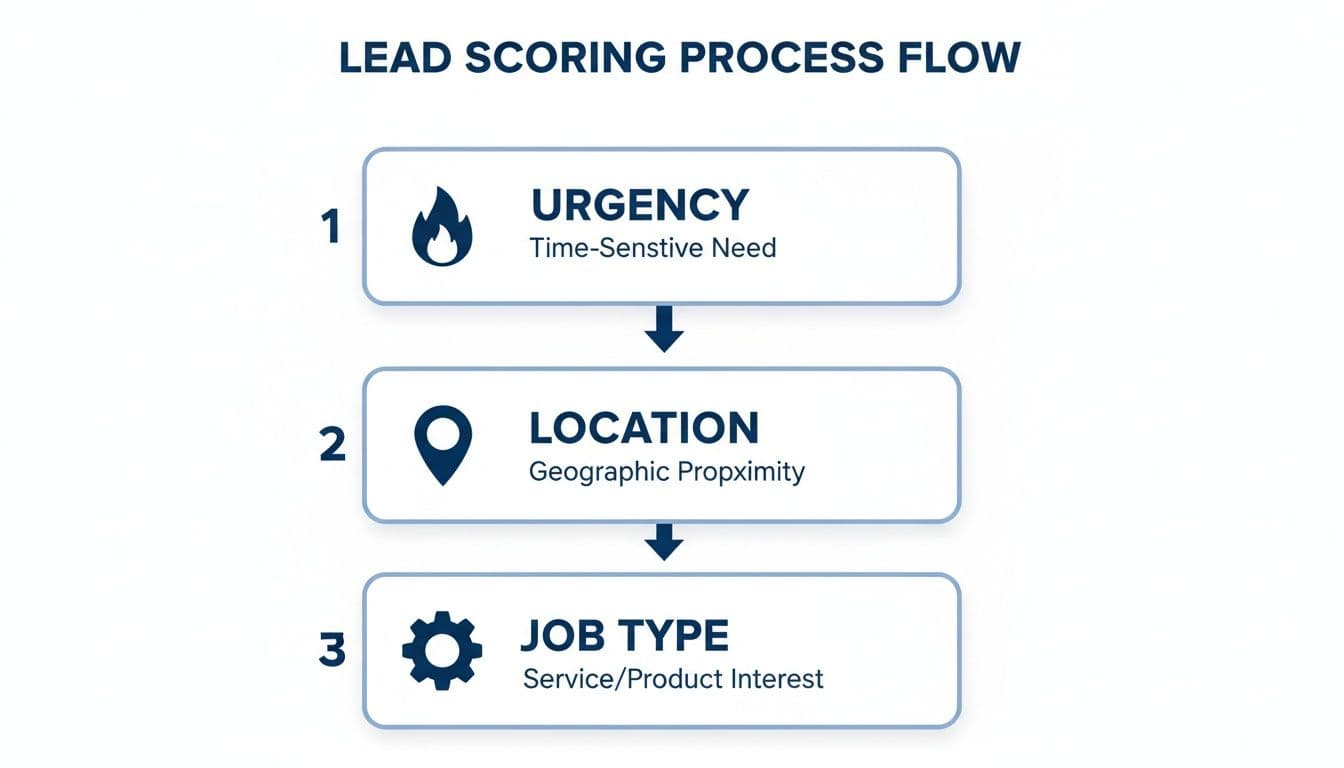
As you can see, an automatic tool can quickly check your most important points. This makes sure only the best leads get to you.
Why Simpler Is Often Better
You don't need huge, costly software to do this. For most service businesses, a special tool like an AI receptionist is the perfect answer. It’s made to do one thing very well: answer your phone, qualify callers based on your rules, and book the jobs you want.
Using a tool for your first calls is one of the biggest time-savers a small business can make. It stops you from being the hold-up and makes sure 100% of your leads get a fast, professional answer, day or night.
This doesn't just save you a ton of time. It builds a smarter way to grow your business without getting tired.
If you want to know more about how this tech can help your business, check out our guide on the benefits of an AI phone answering service. For anyone tired of chasing every phone call, it’s a big help.
How to Track Your Results and Fine-Tune Your Process
You've set up a new way to qualify leads. Now what? The only way to know if it's working is to watch a few key numbers. This is not about getting lost in data. It's about seeing what works and finding ways to make small changes that get big results.
Your most important number here is the lead-to-appointment rate. It's a simple number that tells you how many of your good leads turn into booked jobs. If you qualify 10 leads and seven of them book a job, your rate is 70%.
Making Smart Adjustments
Watching this number over time will show you patterns. If your rate is going up, you know you're doing the right thing. But what if it goes down? That’s your sign to look at your questions again. A small change might be all you need. Maybe one question is scaring people away, or you're not asking something that would close the deal.
The real magic happens when you check your results and make changes. You track the numbers, listen to what your customers are saying, and use that to get better. This simple loop is the secret to booking better jobs and growing your business.
A great way to get this information is by listening to call recordings or reading text messages. This shows you exactly how customers talk about their problems and what they really need from you. Understanding their words helps you improve yours.
For more on tracking calls, check out our guide on how to track phone calls.
Got Questions About Qualifying Leads? We've Got Answers.
Starting a new way to qualify leads can bring up a few questions. Let's answer some of the most common ones that business owners like you have.
What’s the Real Difference Between a Lead and a Prospect?
Think of it like a funnel. A lead is anyone who has shown any interest in your services. Maybe they found your website on Google or called to ask a question. They are in the door, but you don't know anything about them yet.
A prospect, on the other hand, is a lead you’ve talked to and checked out. You've asked the right questions and know they're a good fit. They have a problem you can solve, they are the one who can say "yes," and they want to get it done soon.
So, all your prospects start as leads, but only the ones that are a good fit become prospects.
How Long Should a Qualification Call Really Take?
Aim for five to ten minutes. That's it. This is not the time for a long sales talk. It's a quick chat to get the main facts.
Now, if the call goes longer, that's usually a great sign. It often means you're talking to someone who is serious and ready to talk about their project. But the first part—"are we a good fit?"—should be handled quickly.
The goal of a qualification call is not to close the sale right there. It's to find out if this person is worth more of your time and energy.
When Should I Pull the Plug and Disqualify a Lead?
The second you find a big problem. Do not waste your time or theirs by making a talk longer when you know it's not going to work.
You can politely end the call if you see red flags like:
- Their budget is way too low for your prices.
- They need service far outside your travel area.
- They’re asking for a service you don’t offer.
Letting a bad lead go quickly is not rude—it's just good business. It frees you up to focus on the customers you can actually help and shows you respect everyone's time.
Ready to Never Miss a Call?
7 days. Cancel anytime.
Let Cira answer your calls and book jobs while you work.