What Are Inbound Calls and How Do They Help Your Business?

Let's keep it simple. An inbound call, explained simply, is when a customer calls you. It is like someone walking into your store from the street. They already know you and have a reason to call.
Most of the time, they are ready to book a job or buy something right now.
Why Inbound Calls Are So Important
Think about this: you are a plumber, and your phone rings. It's a person with a broken pipe who found you on Google. That's an inbound call. For a business like yours, that call is like gold. You did not have to find this customer. They came right to you with a problem.
Every inbound call is a "warm lead." The caller has already looked you up and picked you. This makes them much more likely to become a customer than someone you call out of the blue.
For a small business, every phone call is a chance to make money. Missing just one call can mean losing a big job. That is why businesses take this so seriously. The market for software that tracks inbound calls grew to $2.85 billion in 2025. You can read more about it in the report from Research and Markets.
It's simple: inbound calls are not just calls. They are chances to earn money. The customer has a problem, and they think you can fix it.
This direct line to customers is why inbound calls are key for plumbers, cleaners, and other service businesses. The calls show that your ads are working and that people need what you sell. How you handle these calls is the key to growing your business.
Inbound vs. Outbound Calls: What's the Difference?
Let's look at the difference between inbound and outbound calls. It is very simple.
Think of it like this: an inbound call is like a customer walking into your shop. They know what they want and chose you to help them. An outbound call is like you setting up a booth at a fair. You are talking to people who walk by, trying to get them interested.
The main difference is who starts the call. With inbound calls, the customer calls first. They have a problem or a question, and they are calling you for an answer. This makes the talk feel friendly and direct.
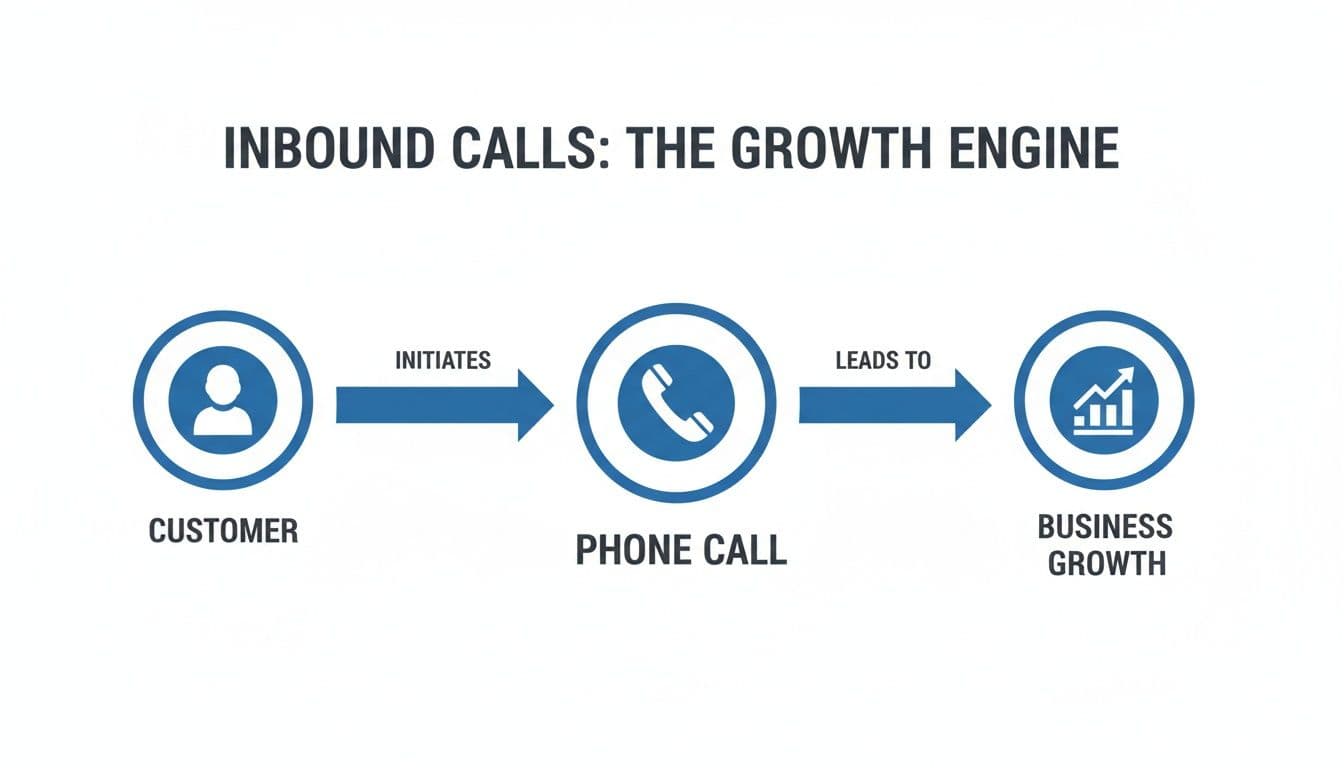
As you can see, when a customer needs help, their call can help your business make money.
Who Is in Charge of the Call?
The person who dials the number usually leads the talk. When a customer calls you (an inbound call), they are often in a hurry. A person with a broken pipe is not calling to chat. They need a plumber right away. Your job is to listen, give a fast solution, and book the job.
With outbound calls, you are in charge. You have to make a connection, explain why you are calling, and lead the talk where you want it to go. The person you call was not expecting to hear from you. So, you have to act differently. You need to build interest, not fix a problem they have right now.
This change in thinking is very important. An inbound caller already knows they need help. An outbound contact might need you to show them they have a problem you can fix.
To make it super clear, let's put them next to each other.
Inbound vs. Outbound Calls Side-by-Side
This table gives you a quick look at the main differences.
| Feature | Inbound Calls (Customer Calls You) | Outbound Calls (You Call a Customer) |
|---|---|---|
| Who Calls First? | The customer calls you first. | You or your team calls the customer first. |
| Main Goal | To fix a problem, answer a question, or book a job. | To find a new customer, follow up, or sell something. |
| How Urgent Is It? | Very urgent. They have a problem that needs to be fixed now. | Not very urgent. They were not thinking about your service. |
| Customer's Feeling | This is a warm lead. They are already interested and ready to talk. | This is a cold lead. You need to get them interested. |
| Tone of the Talk | You listen and help solve a problem. | You are active and try to create interest. |
Knowing who started the call tells you how to handle it. This makes you much better in both cases.
The 4 Main Types of Inbound Calls
When your business phone rings, it is usually for a reason. If you can figure out that reason quickly, you can guide the call to a good result.
Think of it this way: not every knock on your door is a salesperson. Sometimes it's a neighbor or a delivery. The same is true for inbound calls. Knowing who is calling and what they need is the first step to turning that call into money.
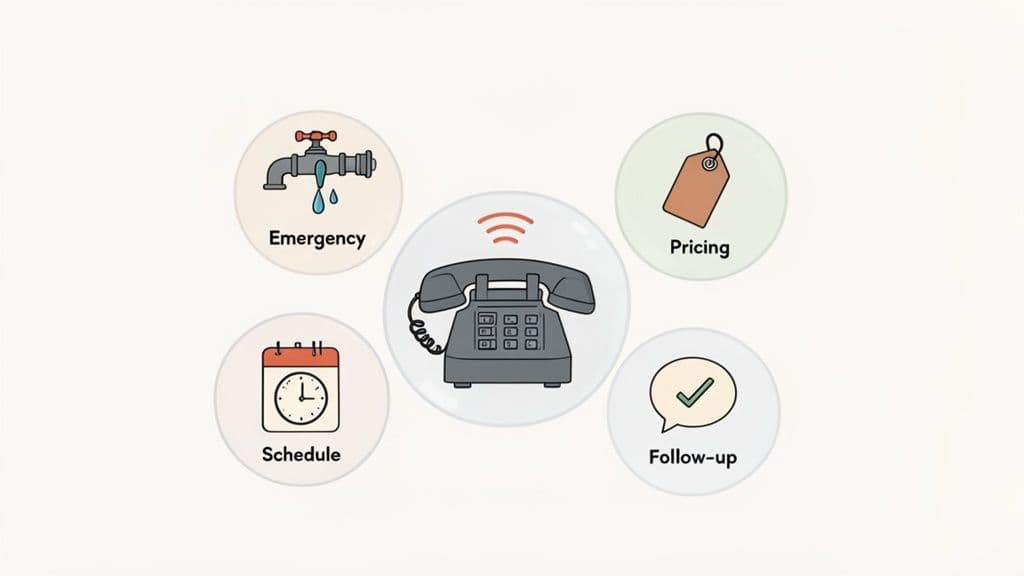
1. The "Help Me Now!" Urgent Call
These are the calls everyone wants. A customer has a big problem, like a broken pipe or a dead AC in the summer. They need it fixed right away. They are ready to hire someone and are less worried about finding the lowest price.
For example, a person might call and say, "My basement is flooding! Can you send a plumber now?" This is a great chance for you. Your job is to be calm and help them. Quickly get the main details, tell them help is coming, and you will likely get the job.
2. The "Just Looking" Pricing Call
Many callers are just looking for information. They want to know what their project might cost.
You will hear questions like, "How much to redo a small bathroom?" or "Do you give free estimates for roof repairs?" These are good leads, but they need clear, simple information to move forward. Having a simple way to explain your prices will help a lot.
The key is to be open and helpful. Even if they don't book right away, a good talk makes them remember you. When they are ready to buy, you will be the first one they call.
3. The "Let's Do It" Booking Call
This is the call you want. These customers have done their homework, they like your business, and now they are ready to book a job.
It might sound like, "Hi, I got your price and I want to book the job. Are you free next Tuesday?" Making this easy is very important. A messy booking process can make them change their mind.
Here is how to do it right:
- Be Ready: Have your calendar open so you can offer dates and times right away.
- Check Everything: Repeat the date, time, and job details back to them. This stops mistakes and shows you are organized.
- Tell Them What's Next: Let them know what will happen. For example, "Great, you will get an email from us in the next 10 minutes to confirm."
4. The "Just Checking In" Follow-Up Call
You will also hear from current or past customers. They might be calling to check on a job, ask a question about work you did, or report a new problem.
A customer might call and say, "The new faucet you put in is dripping. Can someone look at it?" How you handle these calls shows what your business is all about. Answering their concerns quickly shows you care about your work. This is how you build a good name and get more business.
Best Ways to Handle Your Inbound Calls
How you answer the phone can make or break a sale. That first impression is everything. Even when you are busy, a few simple, professional habits can turn a caller into a customer.
It all starts with a great greeting. Do not just say "Hello?" Try something that shows who you are and sounds professional. A friendly, "Thanks for calling [Your Company Name], this is [Your Name]. How can I help you?" shows you are ready to help.
That small step makes the caller feel good and tells them they called the right place.
Be a Good Listener
Once you greet the caller, the most important thing to do is listen. Do not rush to give answers or prices. Let them explain their problem without cutting them off. This is called active listening. It is how you learn what they really need.
As they talk, write down the key details: their name, address, and what the problem is. Repeating the problem back to them is a simple way to show you were listening. For example, you could say, "Okay, so a pipe is leaking under your kitchen sink. Is that right?" This simple check builds trust and makes sure you have the right facts.
Your main goal is not just to book the job. It's to make the customer feel heard and understood. A caller who feels respected is more likely to hire you.
Guide the Call with Clear Next Steps
After you understand the problem, it is your turn to lead. Clearly explain what happens next. Whether you need to schedule a visit, send a price, or book the job, make the process sound simple.
Do not be vague. Instead of saying, "I'll get back to you," try something like, "I will send you a price by 5 PM today." This sets clear goals and shows you are a pro who does what they say.
Phone calls are still a very strong tool. A recent study found that 71% of young adults think a live call is the best way to handle tricky problems. This is a huge reason why handling your inbound calls well is so important. You can see more in this 2024 call center market report.
These tips help you control the call and leave every caller with a great feeling. If handling all the calls gets to be too much, learning what is a virtual receptionist can give you other good options.
How to Know if Your Inbound Calls Are Working
If your phone does not ring, your business is not growing. It is that simple. But just because the phone rings does not mean you are making money. So, how do you know if your inbound calls are helping your business?
You do not need to be a math expert. By tracking just a few key numbers, you can see how your phone calls are helping you earn money.
Think of it like checking the gauges on your truck. You look at the fuel and oil to make sure the engine is running right. The same idea works for your inbound calls. A few key numbers tell you if your ads are working and if you are good at turning callers into customers.
Key Numbers to Watch
To see how you are doing with inbound calls, you only need to focus on a few main numbers. They are easy to track and give you a quick look at what is working and what is not.
- Total Call Volume: This is the big number. How many calls came in this week or month? If this number goes up, your ads are working. If it goes down, it might be time to change your plan.
- Missed Call Rate: What percent of calls are you not answering? Every missed call is a lost job. After all, nearly 85% of callers will not call back if they get voicemail.
- Conversion Rate: This is the most important number. It tells you how many of your inbound calls turn into booked jobs. This shows how well you turn a phone call into money.
For a closer look, you can also use tools like conversation analytics software to understand why people are calling.
Tracking these numbers helps you move from guessing to knowing. You can make smart choices based on real facts, not just a feeling about how busy the phones seem.
How to Figure Out Your Success
Finding these numbers is easier than you think. Just pick a time, like one week. Then, count your total calls, how many you missed, and how many new jobs you booked from those calls.
Let's use an example. Imagine last week you got 20 calls. You missed 4 of them and booked 8 jobs.
- Your Missed Call Rate is 20% (4 missed calls ÷ 20 total calls). That's high.
- Your Conversion Rate is 40% (8 booked jobs ÷ 20 total calls). Not bad!
These simple numbers give you a starting point. From here, you can set clear goals, like lowering your missed call rate and raising your conversion rate. For more tips, check out our guide on how to track phone calls from your website.
Using Technology to Never Miss a Call
If you are a busy contractor, you know the feeling. You are up on a roof or under a sink, and your phone rings. It is a new customer, but you cannot answer.
Every missed call is a lost job that goes to a competitor who did answer. Luckily, technology now gives you a way to catch every one of those leads, even when you are busy.
Tools like an AI voice receptionist can act as your 24/7 front desk. It can answer every inbound call with a professional, friendly voice. Think about it: a system working all the time to find new leads, book jobs, and take messages. You never have to stop what you are doing.
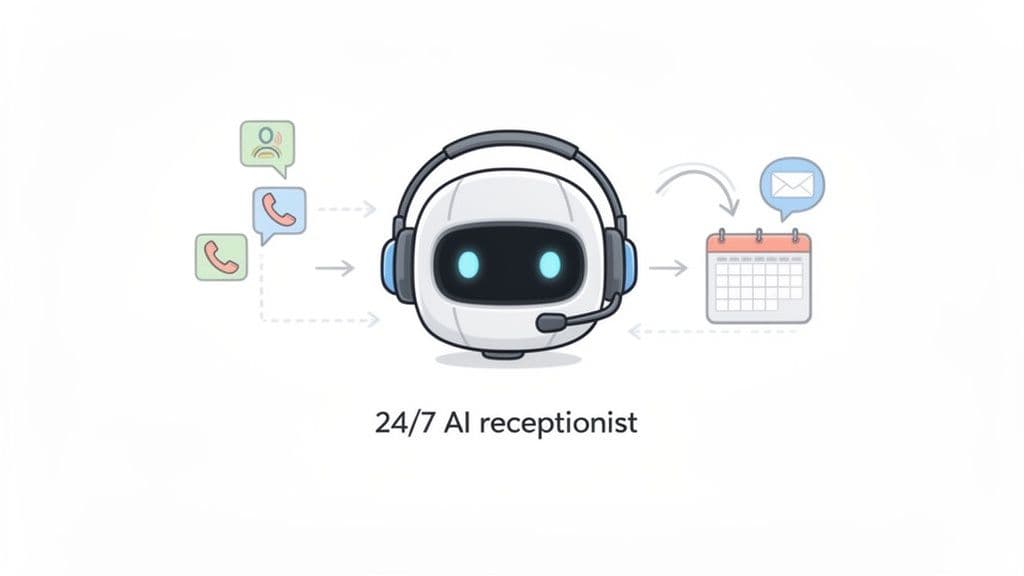
How Automation Helps You Grow
Using tech to handle your calls is about working smarter, not harder. An automatic system makes sure no job ever gets lost.
This also makes your business look more professional. Instead of voicemail, callers are greeted by a helpful assistant who can answer questions and help them. It makes your business feel bigger and more organized. This builds trust from the very first call. For more control, looking at different types of Call Center Recording Software can also be a big help.
This area is growing fast. The call center software market is expected to be over $41.7 billion in 2025. By that same year, experts think that 80% of companies will use AI for simple customer chats.
When you automate your phone answering, you have more time to do the work that pays the bills. You can stay on the job and know your new leads are being handled well.
Key Benefits of an AI Receptionist
An automatic answering service does more than just take messages. It becomes a key part of your sales process. It creates a smooth, professional experience for every caller.
Here is what it does for you:
- Catch Every Lead: You will never miss another call, day or night.
- Save Time: Let the system handle simple questions and booking so you can focus on your work.
- Improve Customer Service: Give callers fast, helpful answers that make them feel cared for.
- Book More Jobs: Automatically check if callers are good leads and text them your booking link.
This kind of tech lets even a one-person shop compete with bigger companies. If you want to know how it all works, our guide on the benefits of an AI phone answering service might be helpful.
Your Top Questions About Inbound Calls, Answered
Let's be real. Trying to run your business while always being on your phone can be tiring. Here are some quick, simple answers to the questions we hear most from contractors about inbound calls.
What Does a Missed Call Really Cost Me?
A missed call is more than just a missed call. It costs you money. For a plumber or electrician, an unanswered call that hurts your bottom line could have been a $500 repair** or a **$5,000 job. And when you do not answer? The customer just hangs up and calls the next person on their list.
It gets worse over time. You don't just lose that one job. You lose future jobs, good reviews, and other customers they might have told about you. Over a year, that adds up to a lot of lost money.
What’s the Easiest Way to Get Better at Answering the Phone?
The simplest change you can make is to be sure someone—or something—answers every single time. Since you cannot be free 24/7, the best answer is to use an AI receptionist or the best answering services for plumbing, HVAC, and more.
This one step stops leads from going to your voicemail. Just having a system that gives a professional greeting and gets the caller's info gives you a big lead over others who let the phone ring. Once that is set up, you can add more tools, like automatic booking.
How Can I Use Technology to Sound More Professional?
Think about it. What sounds better? A rushed "Hello?" from a noisy job site, or a calm, professional greeting every time a customer calls? An AI receptionist gives you that professional sound. It can make your one-person shop sound as solid as a big company.
It can handle the basics just like a person would. It can answer common questions, schedule visits, and send urgent calls to you. This gives every caller a great experience. That professional touch builds trust and helps you win jobs, even against bigger competitors.
Ready to Never Miss a Call?
7 days. Cancel anytime.
Let Cira answer your calls and book jobs while you work.