How to Make the Best Business Phone Greeting

Your business phone greeting is the first time a new customer talks to you. It's your one chance to make them trust you right away. A good greeting tells them they called the right person. If you get it right, a caller can turn into a new job.
Why Your Phone Greeting is So Important
Think of your phone greeting as a handshake for your business. For people who do home services, that first impression happens in just a few seconds. It often decides if you get the job or if the caller tries someone else.
A greeting that is hard to hear or not there at all doesn't just lose a call. It costs you money.
When you are on a job, driving, or doing paperwork, you can't always be on your phone. A clear, professional phone greeting is your secret tool. It works for you 24/7. It makes sure you never sound unprofessional or like you're not there. It’s not just about being polite. It’s about getting every dollar that calls your business.
What a Missed Call Really Costs
For a small business, a missed call is like a hole in your pocket. Callers today do not like to wait. If they don't hear a helpful voice right away, they hang up. Studies show that small businesses can lose many new customers from calls that are not answered well.
But a great greeting can help you answer more calls. It can turn callers who might have hung up into real leads.
Your phone greeting is your best worker. It is never sick, is always polite, and makes every caller feel important. It does this even when you are busy with a project.
A simple, clear greeting does more than just answer the phone. It builds trust right away. This is very important in home services, where you ask people to let you into their homes. That trust starts when they call you. A bad first impression can give a lasting image of poor customer service before you even talk to them.
See how different phone greetings change what a customer does next.
Greeting Type vs. Customer Action
| Greeting Type | What the Customer Might Do | How It Affects Your Business |
|---|---|---|
| No Greeting/Rings and Rings | Hangs up and calls someone else. | Lost lead, lost money. |
| "Hello?" (Hard to hear) | Asks, "Is this [Your Business]?" Feels unsure. | Makes you look unprofessional. |
| Plain Voicemail ("Leave a message") | Leaves a short message or hangs up. | Low chance they will call back. |
| Professional, Clear Greeting | Listens to options, leaves a good message, or books online. | Gets the lead, builds trust from the start. |
The right greeting is a smart tool.
This greeting is your first line of defense. It turns your phone from a problem into a machine that gets leads. A good greeting will:
- Say who you are: Callers know they called the right place. "Thanks for calling Mike's Plumbing."
- Tell them what to expect: Let them know when you will call back. "We'll call you back in one hour."
- Give other options: Point them to your website. "You can also book a job on our website at..."
By handling that first call perfectly every time, your greeting helps your business grow, one call at a time.
The Simple Steps for a Great Greeting
Making a professional phone greeting is not hard. The best ones are often the simplest. Think of it as a quick, three-part handshake. It lets callers know they’re in the right place.
It all comes down to this: say who you are, say hello, and tell them what to do next. That's it. This way is clear, gets to the point, and shows callers you respect their time.
Start with Who You Are
When a customer calls, they are thinking one thing: "Did I call the right number?" Your first job is to answer that question right away. Don't make them guess.
So, instead of a quiet "Hello?", start with a clear, sure voice, "Thanks for calling Apex Plumbing and Heating." Just like that, you've told them they're in the right place. You have built a little trust and set a good tone. It’s a small change that makes a big difference.
Give a Clear Next Step
Okay, they know they've reached you. Now what? Don't leave them waiting in silence. The worst thing you can do is make them guess what to do. You need to show them the way.
This is your chance to tell them what to expect and lead them to the best result. Forget a simple "Leave a message." Be clear and helpful. This way, even if you miss the call, they feel taken care of.
Here are a few good "next steps" that work:
- To get a callback: "Please leave your name, number, and a short message. We’ll call you back in two hours."
- To get them to book online: "For the fastest service, you can book on our website at ApexPlumbing.com. If you want to wait, just leave a message after the tone."
- For urgent problems: "If this is an emergency, please text the word HELP to this number, and we'll answer right away."
A great business phone greeting doesn't just answer the call. It answers the caller's silent questions. By saying who you are and what to do next, you turn a confusing moment into a good one.
Sound Like You Mean It
You can have the best words, but if you sound like a robot, it won't feel real. How your voice sounds is just as important as the words you say. You want to sound both professional and friendly.
Here’s a trick that always works: smile while you're recording. It sounds silly, but it really makes your voice sound warmer. Speak a little slower than you normally would and be clear. Pretend you're talking to a new customer standing in front of you. That real tone is what makes a simple recording a great first impression.
Greeting Examples for Any Business Need
Having the right words ready for any time makes your business sound professional, even when you're not there. You don't need a long message—just a clear one that helps your customer and tells them what to expect.
Below are some simple examples for common business needs. You can change them to fit your business, whether you're a plumber, electrician, or roofer.
For Your Main Business Line (When You Answer)
This is your front door. It’s the greeting callers hear every day. It needs to be friendly, quick, and to the point. The goal is to let them know they've reached the right place and guide them to their next step.
Example: "Thanks for calling Mike's Reliable Plumbing! For the fastest service, you can book a job online now at MikesPlumbing.com. To speak with us, please stay on the line or leave a message after the tone. We'll call you back in one hour."
Why does this work? It offers a quick fix (online booking) and gives a clear time for a callback. Callers like that.
Not sure if your greeting is doing a good job? Use this quick checklist.
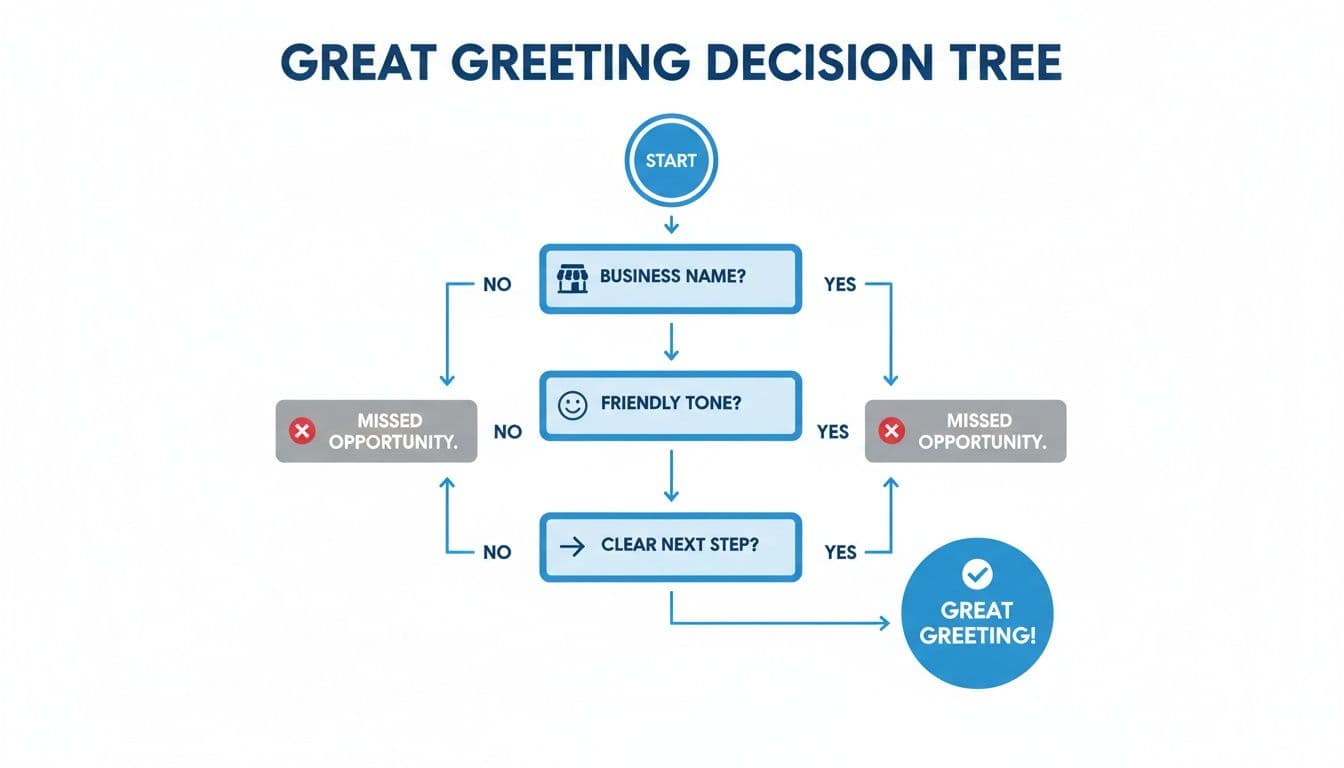
A great greeting only needs three things: you say your business name, you sound friendly, and you give the caller a clear next step.
For Your Voicemail Greeting
When you can't get to the phone, your voicemail message has to do the hard work. The most important thing here is to be clear about when you'll get back to them. No fuzzy promises.
Example: "You've reached Johnson Electric. We're on a job or helping another customer right now. Please leave your name, number, and tell us about your project. We return all calls in four business hours. Thank you!"
This message works because it’s professional and sets expectations. Customers are not left wondering. They know exactly when to expect a call from you. People today expect fast follow-up, with 91% of customers wanting a text after a call. It's good to learn about SMS marketing trends to see how important quick, modern ways of talking are.
Greeting Examples for Different Times
To make things even easier, here's a quick table. Just find your need and use the example.
| Need | What to Say | Example Part |
|---|---|---|
| After Hours | Your normal business hours and when you'll call back. | "Our office is now closed. Our hours are Monday-Friday, 8 AM to 5 PM... We will call you back the next business day." |
| Holidays | The dates you'll be closed and when you'll be back. | "Our office will be closed from December 24th and will open again on January 2nd... We'll call you back when we return." |
| Emergency Line | A clear choice for callers with urgent needs. | "If this is an emergency, please press 1 now to talk to our on-call helper." |
| Bilingual | A simple choice for non-English speakers. | "Thank you for calling. For English, please stay on the line. Para español, oprima el número dos." |
These examples give you a good start. Always change the details to fit your company.
For After Hours and Weekends
Calls don't stop just because your workday is over. A special after-hours greeting tells customers you’re closed but still care about their call and will follow up soon.
Example: "Thank you for calling Clean Sweep Services. Our office is now closed. Our business hours are Monday through Friday, 8 AM to 5 PM. Please leave a message with your name and number, and we will call you back the next business day."
Pro Tip: If you offer 24/7 emergency services, this is the perfect place to say it. For example: "If this is an emergency, please press 1 now to talk to our on-call helper."
That one small change can turn a missed call into your next big job.
For Holidays and Vacations
Taking a break? Let your customers know. A special holiday greeting stops confusion and shows you are on top of your messages, even when you're away.
Example: "Happy Holidays from the team at Premier Roofing! Our office will be closed from December 24th and will open again on January 2nd. We look forward to helping you in the new year. Please leave a message, and we will get back to you when we return."
For Bilingual Customers
Helping a community with many languages is a big plus for any local business. A bilingual greeting makes more of your customers feel welcome from the first second.
Example (English/Spanish): "Thank you for calling Garcia & Sons Landscaping. For English, please stay on the line. Para español, oprima el número dos."
This simple step can open your business to a whole new group of customers. It shows you're ready to help everyone in your town, making them feel important right away.
How to Record Your New Greeting Like a Pro
A great script is only half the job. How you say it is what really matters. You don't need a fancy studio to sound great. A few simple tricks are all you need to make your recording clear, friendly, and professional.
The good news is you probably have all you need right now. The key is to control where you are and how you sound.
Finding the Right Space and Tone
First, find a quiet room. This seems clear, but your phone's microphone can pick up a lot of background noise. A TV in another room, a humming fan, or traffic outside can ruin a recording.
A small room with soft things, like carpets or a couch, is best. These things soak up sound and stop that empty-room echo. It's a simple but important step to reduce background noise for crystal-clear recordings.
Once you find your spot, think about how you're speaking. A few small changes here can make a big difference:
- Speak Slowly: Go a little slower than you do in a normal chat. This makes your message easier for callers to understand.
- Smile When You Talk: I know it feels a bit strange. But smiling really changes your voice, making you sound warmer and friendlier.
- Stand Up: Recording while standing helps you project your voice better and sound more sure of yourself.
The goal is to sound like the best version of yourself—professional but still human. You want callers to hear a friendly person on the other end, not a robot.
From Recording to Using It
Okay, so you have a recording you like. Now what? Getting it onto your phone system is usually easy.
Most business phone services have a website or a mobile app. You just need to log in, find the "Greetings" or "Voicemail" settings, and upload your sound file. They usually take common file types like MP3 or WAV.
For many small business owners, recording your own greeting is a great, free option. But if you want a perfect, professional voice every time without the work, there’s an even easier way. For more ideas, our guide on how to make the perfect business phone message has lots of great tips.
Let an AI Helper Handle It
If you are very busy or just don't like the sound of your own voice, an AI helper like Cira can be a big help. It uses a natural, professional-sounding voice for your greeting 24/7. This takes all the stress off you.
You won't have to worry about the recording quality, finding a quiet place, or starting over if you make a mistake. Even better, you can update your greeting for holidays in seconds, without having to record a new message each time. It’s a simple way to make sure your business phone greeting always sounds great, so you can focus on your business.
Go Beyond Greetings With an AI Helper
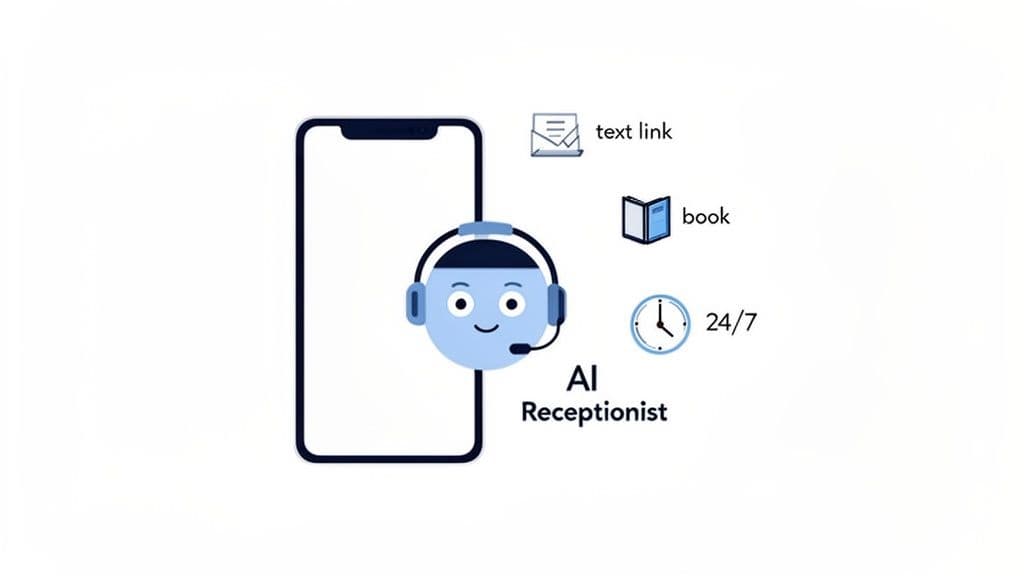
A good business phone greeting is a great start, but it doesn't do anything on its own. What if your phone could do more than just play a message? It’s time to think past a simple recording. An AI helper that works 24/7 can actually help your customers and book more jobs for you.
Think about it: a phone that doesn't just answer but helps every single caller, any time of day. This is how an AI helper changes the game for small businesses. Instead of just hearing your greeting, a caller can get what they need right away.
From Answering to Helping
An AI helper answers every call right away with your own greeting. Your brand always sounds professional. But it doesn't stop there. It can answer common questions, text your booking link to the caller's phone, or even book a job on your calendar.
This means you stop losing leads while you’re busy. Your phone system is now working for you, turning calls into jobs. A customer who needs a price quote doesn't have to leave a message and wait. They can book it right then.
The biggest change with an AI helper is moving from just taking messages to solving problems. It turns your phone from a simple voicemail into an automated helper that gets business all day and night.
This way of working makes your business feel bigger and more organized than others. It shows customers you care about their time and are ready to help. This builds trust from the first call.
The Good Things for a Small Business
For a small business, especially in home services, the change is huge. Your time is what matters most. An AI helper saves you hours you would waste playing phone tag or repeating the same information.
Here’s a quick list of what an AI helper can do for you:
- Never Miss a Lead: Every call is answered and handled, even at night and on weekends. You get every chance that comes your way.
- Save Time and Money: It automates the simple tasks you or a worker would handle, like booking jobs or answering questions.
- Give a Professional Feel: Every caller gets a quick, helpful answer. This makes your brand look great and sets you apart from other local pros.
Of course, before adding tools like an AI helper, you need the right phone setup. It's smart to compare business phone systems to see what works best for you.
By upgrading from a simple business phone greeting to an AI helper, you turn your phone into a tool for growth. You can see how an AI receptionist for small business can help you book more jobs without any extra work. It's a tool that often pays for itself with the very first job it books for you.
Answering Your Top Questions About Business Greetings
Even with the best examples, you probably still have a few questions. Getting your phone greeting right is a big deal, so let’s answer some common questions from other business owners.
How Long Should My Business Phone Greeting Be?
Short and sweet is the best way. Your customer is calling for a reason, and a long message is just in their way. Try to keep it between 20 and 30 seconds.
That’s just enough time to say what you need to without making them wait. The whole point is to be helpful, not to talk too long.
A great greeting gives callers just what they need and nothing more. Say your business name, tell them when you'll call back, and give a clear next step. Anything else is just noise.
What's the Biggest Mistake to Avoid?
The biggest mistake is using the plain voicemail that came with your phone. Hearing "You have reached 555-1234" makes a business seem like it's not serious. It shows you haven’t thought about your customers.
Always take five minutes to record your own message. Another big mistake is making promises you can't be sure of, like saying you'll call back "as soon as possible." What does that mean? Be clear. Something like, "we'll return your call in four business hours," tells them exactly what to expect and shows you respect their time.
Is It Okay to Use Music in My Greeting?
I would skip the music. For a home service business, a clear, friendly voice does a much better job of building trust. Music can make your words hard to hear or just sound a bit silly.
If you really want music, make sure you have the rights to use it and that it's very quiet in the background. But most of the time, simple is best. Your voice is the best tool you have for making a great first impression.
How Often Should I Update My Business Greeting?
You should update your main greeting any time your business information changes, like new hours. And you must set up special greetings for holidays or when you're on vacation. This keeps your customers informed and shows you're on top of things.
Besides that, it's a good habit to listen to your greeting every six months. You just want to make sure it still sounds good, fits your business, and gives every caller the best experience.
Ready to Never Miss a Call?
7 days. Cancel anytime.
Let Cira answer your calls and book jobs while you work.