How to Create a Business Telephone Greeting That Wins Jobs

A good business telephone greeting is more than just "hello." It's your first handshake with a customer. It helps you build trust and sound like a pro. For home service businesses, that first impression can mean booking a job or losing a caller.
Why Your Phone Greeting Is Your Best Salesperson
When a customer calls, they usually need help right away. A clear, helpful greeting makes them feel they called the right place. It shows you're organized, even if you’re busy at another job.
Think of your greeting as a salesperson who works 24/7. It works day and night to make a good first impression and helps you never miss a lead. It's not just a recording; it's a key part of your business.
Build Trust Right Away
A professional greeting sets a good, calm tone. It tells callers you take your business seriously and that they can expect good work. This is very true for contractors like plumbers, electricians, and landscapers. For them, a customer's trust is everything.
A simple, well-made message does a few key things:
- It confirms they called the right place. No more "Is this...?" questions. They know right away.
- It sets clear expectations. The greeting tells them what to do next, like leaving a message or waiting for a call back.
- It makes you look professional. A good greeting can make a one-person shop seem as organized as a big company.
Your phone greeting is the first promise you make to a customer. A clear, professional message promises good work before you even talk to them.
Catch Every Chance to Get a Job
Let's be real: every missed call is a lost job. A great business telephone greeting is like a safety net. It catches leads even when you can't get to the phone. It makes sure every caller has a good experience.
Good phone service is more important than ever. The call center market reached $352.4 billion in 2024. Also, 62% of customers still like to use the phone to solve problems. This shows that callers expect a lot when they call.
Learning how modern Call Centre IVR Systems serve as your business's digital front door can show you how important that first sound is. Even better, using a https://www.hicira.com/blog/small-business-call-answering-service can handle this for you. It helps turn every call into a booked job.
The Parts of a Good Greeting
So, what makes a great business telephone greeting? Think of it like a simple recipe. You only need a few key things. When you put them together the right way, you get a message that is clear, helpful, and gets the job done.
Don't make it too hard. Shorter is almost always better. Your customers are busy. Your goal is to give them enough info to know they called the right number and what to do next.
Start With Who You Are
The very first thing a caller should hear is your company's name. This seems simple, but it's a big step. It tells them right away that they dialed the right number and avoids confusion. It's a small thing that makes you sound professional.
Think like your customer. If they have a burst pipe and hear "You've reached Express Plumbing," they feel relieved. A simple "Hello?" just makes them wonder if they have the right number.
Explain How You Can Help
After you say who you are, give them a quick idea of what you do. You don't need to list all your services. Just one simple line is perfect.
A roofer, for example, could say, "You've reached Thompson Roofing, for all your repair and installation needs." This connects to why the person is calling and gets them ready to ask for help.
A great greeting answers three questions in under 30 seconds: Who did I call? What can they do for me? And what should I do now? Answering these quickly builds trust and makes people less likely to hang up.
Give a Clear Next Step
This is the most important part of your greeting. You have to tell the caller exactly what to do. This is called a call to action (CTA). If you leave it out, people will get confused and hang up. It happens a lot.
Your CTA needs to be simple and easy to follow. Do you want them to leave a message? Should they press a number to talk to sales? Or maybe you want them to go to your website to book a time. Whatever it is, say it clearly.
To make sure your greeting works well, you need to include a few key parts. Here is a quick checklist to help you.
What to Include in Your Greeting
Use this checklist to make sure your greeting has all the key parts for a good first impression.
| Part | Why It's Important | Simple Example |
|---|---|---|
| Business Name | Tells the caller they reached the right place. | "Thanks for calling Mike's HVAC." |
| What You Do | Quickly tells them how you can solve their problem. | "...your local experts for heating and cooling." |
| Clear Next Step | Tells the caller what to do next to get help. | "Please leave your name, number, and a brief message..." |
| Callback Promise | Sets expectations and shows you care about their time. | "...and we'll call you back within two business hours." |
Using this checklist is the fastest way to see if anything is missing and make sure you always make a great first impression.
Phone Greeting Scripts You Can Use Today
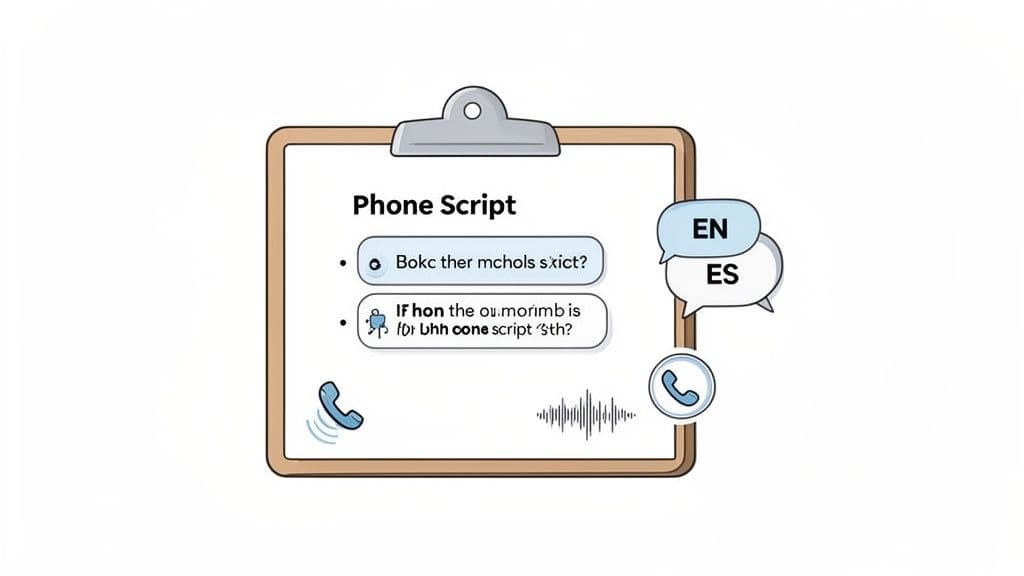
Sometimes, the hardest part of setting up your voicemail is just knowing what to say. The good news? You don't have to guess. We have some simple, good scripts you can use for your own home service business.
Think of these as a starting point. They are made to be short, professional, and clear. Your goal is to give callers the info they need fast. This makes them feel good about leaving a message or doing what you ask next.
Standard Business Hours Greeting
This is your main message for when you are "open" but can't answer the phone. Maybe you're at a job, driving, or just busy. This script is friendly, professional, and tells them when you'll call back.
Example Script:
- "Thanks for calling [Your Company Name]. We’re helping other customers right now, but your call is important to us. Please leave your name, number, and a short message, and we'll get back to you within two business hours. Thank you!"
This works well because it is simple and calm. You're telling the caller you care about their time and giving them a set time for your return call. This helps build trust from the start.
After-Hours Voicemail Greeting
When a customer calls after you close for the day, they need to know you are not just ignoring them. A good after-hours greeting tells them your business hours and when to expect a call back. No guessing needed.
Example Script:
- "You've reached [Your Company Name]. Our office is closed right now. Our business hours are Monday through Friday, 8 AM to 5 PM. Please leave a message with your name and number, and we will return your call on the next business day."
Pro Tip: When you record your greeting, speak slowly and clearly. A warm, friendly voice makes a big difference. Try smiling while you record. It makes your voice sound more welcoming.
Holiday and Vacation Greeting
Taking a vacation or closing for a holiday? You must have a special greeting. It tells your customers what's going on so they don't think you're gone for good. Just remember to change it back when you return!
Example Script:
- "Happy Holidays from the team at [Your Company Name]! Our office will be closed from [Start Date] and will reopen on [End Date]. Please leave a message, and we will get back to you as soon as we return. We hope you have a wonderful holiday!"
Bilingual Greeting (English/Spanish)
If you work in a place with many Spanish speakers, a greeting in both English and Spanish is smart. It shows you care about all your customers. Keep it simple and clear in both languages.
Example Script:
- "Thank you for calling [Your Company Name]. Please leave a message and we will return your call shortly. / Gracias por llamar a [Your Company Name]. Por favor, deje su mensaje y le devolveremos la llamada pronto."
Offering help in two languages is a great way to reach more people in your area. If you want more ideas, our guide on the perfect business phone message can help.
Also, remember that not every caller wants to wait for a call back. Many people today prefer to text. In fact, 91% of customers are okay with getting texts from businesses, and 67% would rather book appointments that way.
A great greeting can even tell callers to text you instead. This gives them a faster way to get in touch. To make sure your scripts are part of a smart plan, it's a good idea to learn some basic call handling best practices.
Common Greeting Mistakes That Cost You Customers
A bad phone greeting can send a new customer right to another company. That's a bad thought, but here's the good news: the most common mistakes are easy to fix.
By learning what not to do, you can make sure your greeting is always clear, helpful, and professional. Let’s look at the simple mistakes that lose businesses jobs every day. Knowing these can help you keep callers on the line.
Talking Way Too Fast
When you're busy with jobs, it's easy to talk fast. But when you record your greeting, rushing is a big mistake. Callers can't understand what you're saying. They'll miss important info like when you'll call back.
The fix is simple: speak slowly and clearly. Before you record, take a deep breath. It also helps to smile while you talk. This makes your voice sound warmer and friendlier. Say your script out loud a few times to find a good, steady speed.
Too Much Information
Another common mistake is trying to say too much in one short message. Some greetings list every service, the full address, and three ways to get in touch. This just confuses people.
Remember, the point of the greeting is to get the caller to do one simple thing. Stick to the basics:
- Your business name.
- A quick thank you for calling.
- The one thing you need them to do next.
That’s it. A homeowner with a burst pipe doesn't want to listen to a long list of your services. Keep it short and simple.
Muffled or Unclear Audio
Have you ever called a business and the greeting sounded like it was recorded in a storm? Or with a dog barking? It makes the business sound unprofessional. Muffled sound makes it hard for callers to understand your message.
The quality of your recording shows the quality of your business. A clear, crisp greeting suggests you pay attention to detail in your work, too.
To get clean audio, find a quiet spot. A small office, a closet, or even your parked work van can work well. These spaces reduce echo. Your phone's voice memo app is usually good enough for a high-quality recording.
The Missing Next Step
This is the biggest mistake. You can't forget to tell the caller what to do next. This is your call to action. Without it, most people will just hang up. They won't know if they should leave a message, send a text, or call back later.
Always end your greeting with a clear, simple instruction. Tell them exactly what you need them to do. For example, end with, "Please leave your name, number, and a brief message, and we'll call you back within the hour." That simple direction makes all the difference.
How to Automate Your Greetings and Never Miss a Job
What if a perfect greeting could answer every call, day or night? That’s what an AI receptionist can do for your business. These tools give your custom greeting every time, answer common questions, and can even text callers a link to book a job.
This simple change turns missed calls into booked jobs. And the best part? Setting it up is very simple. An AI tool like Cira can use your business info to start giving smart, helpful answers right away.
Turn Every Call into an Opportunity
For any home service business, the good things here are very clear. You'll book more jobs, spend less time on the phone, and always look professional. This helps you stand out. Let’s face it, every missed call is lost money.
Using a professional phone system is no longer a nice-to-have, it's a must. Small businesses that use new phone systems often see a 30% rise in how much they get done. This is thanks to things like mobile access. A smart system helps you not just answer calls, but also get leads and book jobs for you. You can learn more about the future of business phone systems and see the numbers for yourself.
Think of an AI receptionist as your best employee. It never takes a day off, always sounds professional, and is set up to turn every caller into a possible customer.
Making Automation Work for You
Getting started with an AI receptionist is much easier than you might think. It just connects to your business info, like your Google Business Profile or website. It learns about your services, hours, and where you work.
From there, it can handle many tasks for you:
- Answer 24/7: It gives your perfect business telephone greeting on every call, no matter when it is.
- Handle Common Questions: It can tell callers your business hours, what services you offer, and where you work.
- Book Jobs for You: The system can text your booking link to the caller, letting them schedule a job right away.
Here are some common and costly greeting mistakes you can avoid by using an automated system.
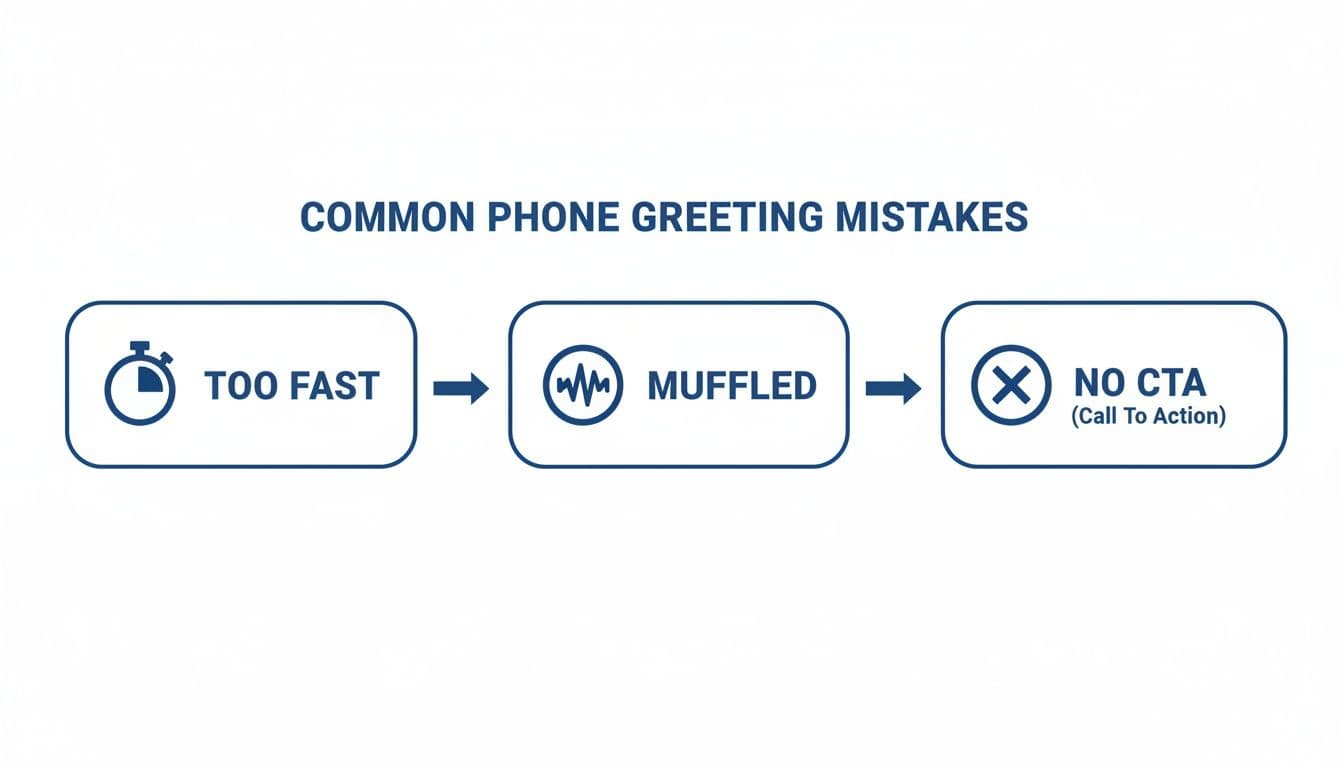
It’s easy to lose customers by talking too fast, having bad audio, or forgetting a clear next step. Automation solves all these problems. An automated phone system for small business is clear and steady on every call, every time. This steadiness builds trust and helps you get more jobs without extra work.
Answering Your Top Phone Greeting Questions
Making the perfect phone greeting often brings up a few common questions. Let's answer them so you can feel good about your message. The key is to be clear, professional, and helpful without overthinking it.
A great greeting is a strong tool, but it doesn't need to be complex. Keeping it simple and friendly is always the best way to go.
How Long Should My Business Telephone Greeting Be?
Keep it short and sweet. The best length for a business telephone greeting is between 20 and 30 seconds. This is just enough time to welcome the caller, say your business name, and tell them what to do next.
Anything longer can make callers upset. A long, rambling message can make people hang up. Remember, they called for a reason. Respecting their time is the first step to a good customer relationship.
If your message is longer than 30 seconds, it’s time to cut it down. Short and simple is your best friend here.
Should I Record the Greeting Myself?
Recording your own voice is a great way to add a personal touch. For a local home service business, hearing your friendly voice can build trust right away. If you do this, find a quiet room, speak clearly, and try smiling while you record. It really does make your voice sound more welcoming.
Of course, not everyone is comfortable recording their voice, and that's okay. If you want a more polished sound, you could hire a professional voice actor. Another great choice is an AI receptionist like Cira. It gives you a clear and professional voice you can change anytime, with no recording needed.
How Often Should I Update My Phone Greeting?
It's a good idea to update your main greeting when your business details change. This could be new hours, a new address, or different contact info.
You should also set up temporary greetings for holidays or when you’re on vacation. This is a simple way to keep your customers informed and shows you're on top of things. As a general rule, listen to your greeting every six months or so to make sure it still sounds right. A quick check helps make sure your first impression is always a great one.
Ready to Never Miss a Call?
7 days. Cancel anytime.
Let Cira answer your calls and book jobs while you work.