Can You Block a Number on a Landline? A Guide to Stopping Spam
Yes, you can block numbers on a landline. How you do it depends on your phone service. But don't worry—there are easy ways to do it, from old-style phones to new ones that use the internet.
Why Blocking Landline Calls Is So Important
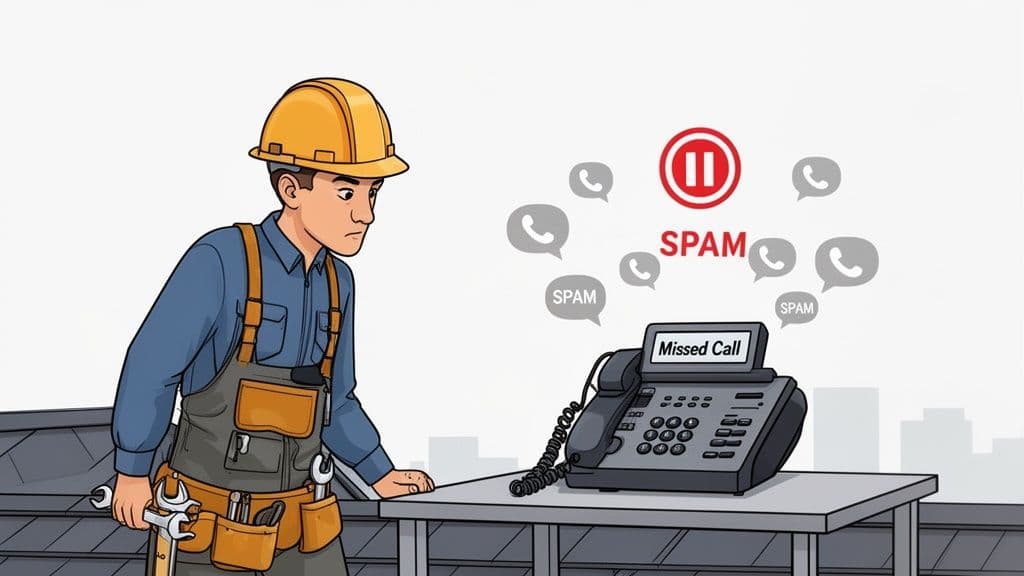
If you run a small business, a ringing phone is not always good news. Spam calls are more than just annoying. They cost you money and waste your time. When your phone line is busy with a spam call, a real customer cannot call you.
Think about this: an electrician is working on a tough job. The phone rings. The electrician stops working, climbs down a ladder, and answers. It is just a recording trying to sell something. This breaks their focus. Even worse, if a new customer tried to call right then, they got a busy signal. That customer probably called someone else for the job.
The True Cost of Spam Calls
Spam calls hurt your business in real ways.
- Lost Money: When junk calls tie up your phone, you miss out on jobs that make you money.
- Wasted Time: Calls that you don't want to answer all day long stop you and your team from working well.
- Unhappy Customers: Real customers can't call you. They may think your business is closed or does not care.
This is a big problem. Spam calls are everywhere, and landlines often get the most of them. One study found that some homes with landlines got almost 50 spam calls a week. That is a lot of calls for a small business to handle. In the U.S., people lost $10 billion to phone scams in 2024.
Blocking spam calls is not just a nice idea. It is a key part of good what is call management. It keeps your phone line open for calls that help your business grow.
This guide will show you how to take back control of your phone. You can use tools from your phone company, a special device, or a smart AI helper. You can stop spam calls for good.
Using Your Phone Company to Block Numbers
Your first defense against spam calls often comes with your phone service. Most big phone companies like AT&T, Verizon, and Xfinity offer simple ways to block calls. Getting started is usually easy.
The most common way is to dial a special code called a "star code." For blocking calls, this code is usually *60. When you dial it, a recorded voice will tell you how to add the last number that called you to a blocklist.
For example, a roofer keeps getting calls from the same sales company. After the next bad call, the roofer can hang up, pick up the phone, and dial *60. By following the steps, they can add that sales number to their blocklist. This will stop those calls.
How Phone Company Blocking Works
This star code method is usually free for most customers with a landline. But it has its limits.
- Small List: Most phone company blocklists can only hold 12 to 100 numbers. This can fill up fast.
- Do It Yourself: You have to add each number to the list one by one. This is hard if you get lots of calls from different spammers.
- Scammers Can Change Numbers: Scammers can fake their caller ID to look like a local number. This makes your blocklist not work as well.
Phone company tools are a good start, but they are not a perfect fix. As you check what your company offers, it's also good to learn about their main telephony and data connectivity services.
Are Phone Company Services Enough?
Phone companies have gotten better at fighting spam. They have filters that can stop about 60% of robocalls. These filters catch known bad numbers before your phone rings.
But billions of fake calls still get through. A latest imp landline report found that some landlines got almost 50 spam calls a week. This was a huge 7x jump. Basic tools just can't keep up.
For a busy business, a phone company's blocking is a good first step. But it often can't stop all the calls. The small blocklist and fake numbers mean spammers can still get through.
For a business that needs its phone line open, it's best to use more than one method. You can use your phone company's tools for some things and other tools for blocking. Our guide on conditional call forwarding can help you learn how to mix these tools. This way, you get the most out of each one.
Buying a Call Blocking Device
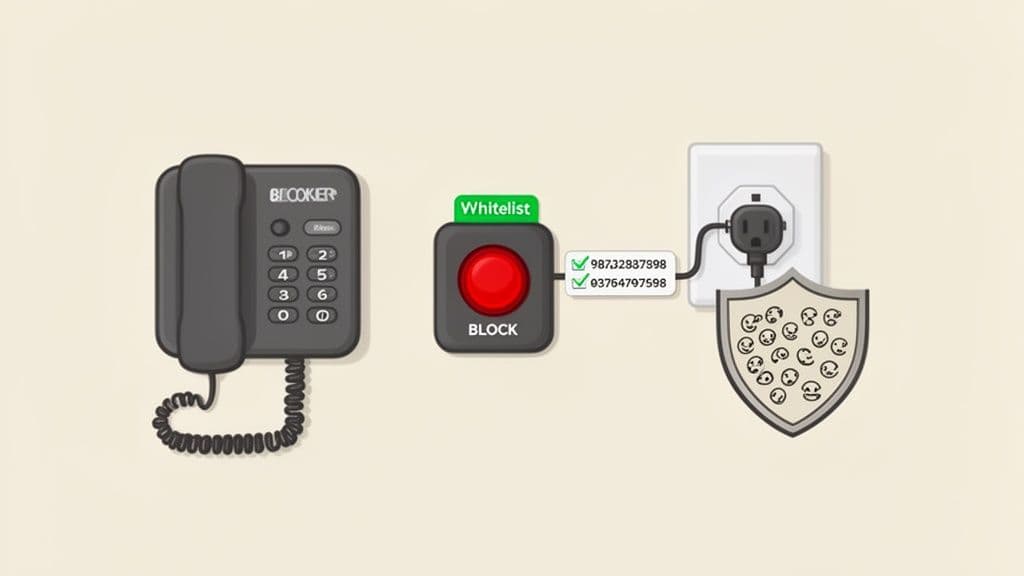
When your phone company's tools are not enough, you can buy a special device. A call blocking device is a small box. You plug it in between your phone and the wall. It acts like a guard for your phone line. It gives you more control than your phone company can.
These devices have one job: to stop unwanted calls. They come with a huge list of thousands of known spam numbers already blocked. This means the device starts working as soon as you plug it in. It stops many bad calls before your phone even rings.
Block Calls with One Press
One of the best things about these devices is how easy they are to use. Most have a big "Block" button, which is often red. When a spam call comes in, you just press it. That's it. That number is now on your blocklist.
It's a very simple way to fight back. You don't have to dial star codes or log into a website. You see the spam number, press the button, and that number can't bother you again.
Powerful Tools for Your Business
These devices also have smarter ways to handle calls. One very helpful tool for businesses is the whitelist.
- What is a Whitelist? A whitelist is a list of approved callers. You tell the device which numbers are always allowed to call you.
- How It Works: You make a list of numbers you trust (like customers, family, and suppliers). Then you turn on "whitelist mode." The device will then block every single call from numbers that are not on your list.
This is great for businesses that only need to hear from certain people. A whitelist keeps your phone line clear for the calls that help you make money.
Studies show that spam calls to landlines went up by 700%. Some people got almost 50 junk calls a week. A special device can help a lot. Some people say it stops up to 95% of these calls. That is much better than what phone companies can do. You can learn more about how landline call blockers outperform carrier tools.
A call blocker is something you buy one time. It can give your business line peace for a long time. For one price, you get a strong tool that puts you back in charge of your phone.
The Smartest Fix: An AI Virtual Receptionist
Blocking numbers is a good start. But what if you could do more than just stop spam? A great system does not just stop bad calls. It also handles every call well, so you never miss a chance to get a new job. For a solution that does all the work for you, an AI virtual receptionist like Cira is a game-changer.
This is not just about blocking numbers. Think of it like a smart guard for your business phone. It acts as your front desk. It gets leads and turns people who call into paying customers. It does not just keep spammers out. It also welcomes real customers.
More Than a Blocker: A Tool to Grow Your Business
An AI receptionist is made to help your business, not just protect it. It works all day and all night, so you don't have to worry about missing a call.
Here is what a service like Cira can do:
- Answers Every Call 24/7: A friendly, natural voice always answers your phone, even at midnight or on a holiday.
- Checks Your Callers: You can set up questions to see if a caller is a real lead or just looking around.
- Books Jobs for You: The AI can text your calendar link to a caller's phone. They can book a job right away.
- Answers Common Questions: It can answer questions about your services, hours, or where you are. This lets you focus on your work.
Imagine this: you are an HVAC tech on a hot day, on a roof fixing an AC. Your phone rings. Instead of grabbing your phone and maybe answering a spam call, Cira handles it. If it is a real customer, the AI gets their info, books the job, and sends you a message with all the details.
An AI receptionist turns your phone from a simple tool into a way to make money. It does not just stop annoying calls. It helps you get more jobs by making sure every real lead is taken care of.
This means you are not just stopping bad calls. You are turning calls into jobs without doing any extra work. The future of handling calls is this kind of smart tech. You can learn more about these AI-Assisted Communications Solutions to get ahead.
A Smart Choice for Your Business
As a small business owner, you know every call could be a job. Missed calls mean lost money. Time on the phone is time you are not earning. An AI receptionist helps you work smarter and pays for itself fast. For many businesses, just one extra job booked by the AI can pay for the whole month of service.
If you are a contractor working on many jobs or a small team trying to get work done, this is a big help. You can read more about how an AI receptionist for small business can change how you work. In the end, it is not just about blocking numbers. It is about building a smarter, richer business.
How to Choose the Right Call Blocking Method for You
So, how do you pick the right way to block calls for your business? It depends on what you need, how much you want to spend, and what you want to do. It's not just about the price. It's about the value each choice gives you.
Let's start with the basics. Your phone company's blocking tools are usually free. That makes them a good first choice. But they don't offer much protection. Spammers almost always find a way around them. They are a good first step, but they are not a full solution.
Comparing Costs and Value
If your phone company's blocking is not enough, the next step is a call blocking device. You buy these once, and they cost between $50 and $150. For that price, you get much more control. Many come with thousands of spam numbers already blocked. Most let you add a new spam number with one button press. It's a great way to stop calls from bothering you.
Then there is a totally different choice: an AI receptionist like Cira. It is a monthly service, but it's more like an investment. Instead of just stopping bad calls, it helps you get real business from good calls. This changes the talk from saving money to making money.
Think about value, not just cost. A blocking device solves the problem of annoying calls. An AI receptionist can get you leads and book jobs you might have missed.
If an AI receptionist helps you get even one more job a month, it has paid for itself. Then, it's not a cost. It's a tool that helps your business grow.
This chart can help you see which choice makes the most sense for your business right now.
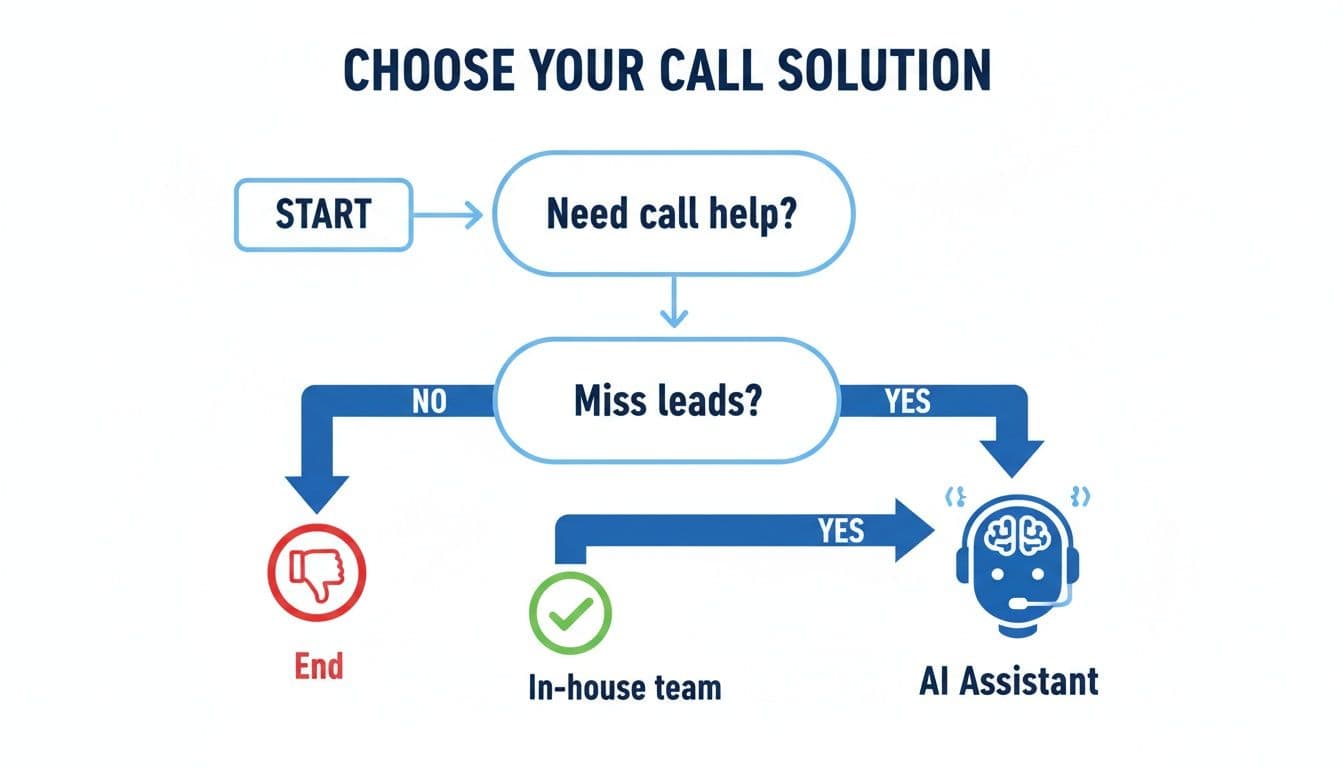
The key takeaway is simple: if you are worried about missing jobs and losing money, a smarter choice like an AI receptionist is the best way to fix that problem.
Making the Smart Choice for Your Business
Picking the right method is not just about stopping spam calls. It is about protecting your most important thing—your time. And it's about making sure your phone lines are open for the people who help your business grow: your customers.
As you think about your choices, think about these last points:
- How Many Calls You Get: If you get just a few spam calls a week, your phone company's free service might be enough. But if your phone rings all the time with junk, you need a stronger tool.
- Your Biggest Problem: What bothers you more? The non-stop spam calls, or the worry that you might be missing new jobs? A blocking device is great for the first problem. An AI receptionist solves both.
- Your Goals for Growth: A simple blocker helps you keep things as they are. An AI receptionist is a tool that can help you grow by making sure you never miss a lead.
Got Questions About Blocking Numbers on a Landline?
Even with all these choices, you might still have questions. That is normal. Let's answer some of the most common questions. This will help you feel sure you are picking the right tool for your business.
Blocking a Number vs. Anonymous Call Rejection
Your phone company may offer both of these. It's easy to mix them up. So, what is the difference?
- Blocking a Number: This means you stop one single phone number that you know. When you use a code like *60, you are telling your phone, "Do not let this specific number call me."
- Anonymous Call Rejection: This is a wider tool, usually turned on with *77. It blocks any call that hides its number. These calls show up as "Private," "Blocked," or "Unknown" on your caller ID.
Here's a simple way to think about it: Blocking a number is like giving a bouncer a list of people who are not allowed in your club. Anonymous Call Rejection is like telling the bouncer to turn away anyone wearing a mask.
It's a good way to stop callers who hide their number. But it will not stop a scammer who is faking a normal-looking number.
How Long Is a Number Blocked, and Can I See My List?
When you block a number, you want it gone forever.
The good news is that blocking a number lasts. Whether you use your phone company, a device, or a virtual helper, that number stays on the "no call" list until you take it off yourself.
But a scammer can just use a different number. That is why it's so important to have a system that can handle new threats.
As for seeing your list of blocked numbers, that depends on the tool you use. With phone companies, it can be hard. You might have to dial a number and listen to a slow voice read the list to you. A blocking device is a bit better. It usually has a small screen you can scroll through.
For the most control, a service like Cira gives you a clear online page. You can see every blocked call, why it was blocked, and manage your list with just a few clicks.
Does Blocking a Number Stop Texts Too?
On a normal landline, the answer is almost always no. Blocking a number is just for voice calls. Most old-style landline phones are not made to get text messages.
But if your business phone is a VoIP line that can get texts (maybe it turns them into voice or email), you'll need to check with your phone company. They will have their own rules for blocking unwanted texts.
This is another area where a virtual receptionist like Cira can be a big help. It can handle both calls and texts in one place, like sending your booking link to a new customer who texts you.
Ready to Never Miss a Call?
7 days. Cancel anytime.
Let Cira answer your calls and book jobs while you work.