What a Warm Transfer Means for Your Business
A warm transfer is when the person who answers a call tells the next person about the call before sending it to them. Think of it like a personal introduction. It's a smooth, friendly way to get a customer to the right person without making them tell their story all over again.
What a Warm Transfer Looks and Feels Like
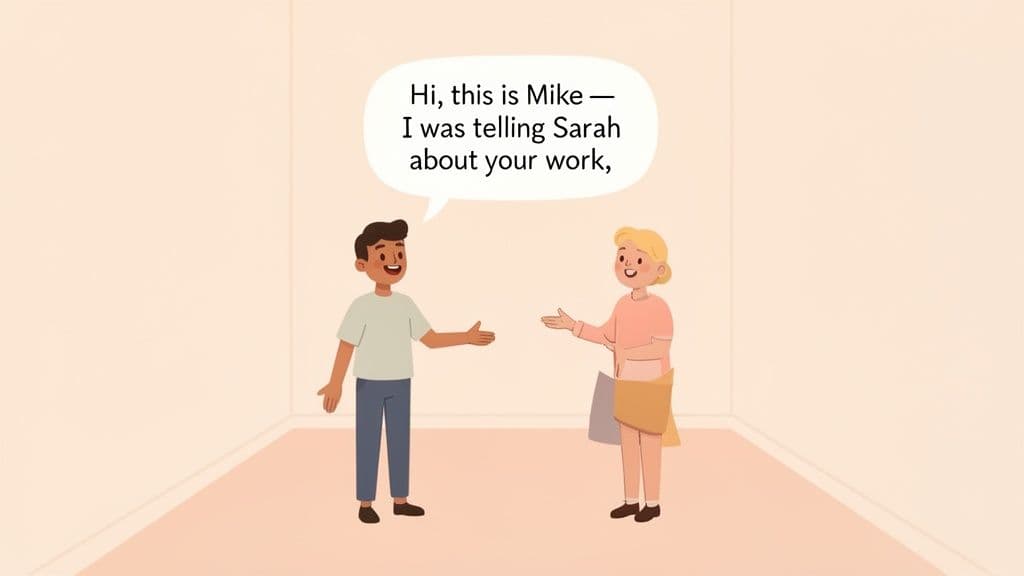
Imagine you are introducing two friends. You would not just push them into a room and leave. You would say, "Hey Sarah, this is Mike. Mike, Sarah is the expert I told you about." That small bit of info makes a big difference. That is what a warm transfer is.
It is the same idea for a business. The person who handles the call transfer gets the important details from the caller. Then, they put the customer on a short hold while they tell a coworker what is going on.
This quick, inside chat makes sure the next person knows how to help right away.
Why Is This So Important?
This simple step makes the customer's experience much better. They feel heard and cared for. Best of all, they do not get mad about having to repeat themselves. A warm transfer shows your team is organized and respects the customer's response-time expectations. This helps build trust right away.
This can be done by a real person or a computer system. In fact, learning how a virtual receptionist handles calls can show you how easy this can be.
A warm transfer is a nice, helpful handoff between team members. It keeps the talk going smoothly and feels personal. It makes sure your customers do not feel like they are just being passed around.
The Difference Between Warm and Cold Transfers
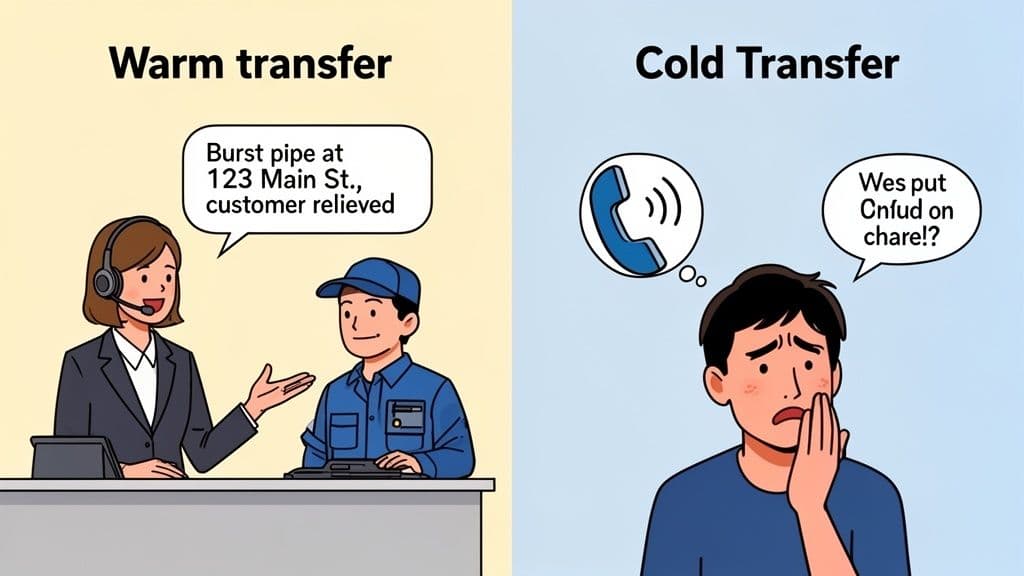
To really get what a warm transfer is, let's look at an example. Imagine a homeowner calls your plumbing business in a panic. A pipe just burst, and their basement is filling with water.
With a warm transfer, your receptionist calmly gets the key details—name, address, and what is wrong. They then tell the caller, "I'm so sorry that's happening. I'm going to get our on-call tech on the line for you. Please hold on for one moment."
While the customer waits, the receptionist quickly tells the tech what is going on. So, when the call connects, the tech already knows: "Hello, this is Tom. I hear you have a burst pipe at 123 Main Street. I'm on my way." Right away, that worried homeowner feels heard and knows help is coming.
The Problem with Cold Transfers
Now, let’s think about that same call, but with a cold transfer (also called a blind transfer). The homeowner quickly explains their problem, only to be sent to another line with no intro. Even worse, they might get sent to voicemail.
They now have to tell their stressful story all over again to someone new—if anyone even answers. It is a very frustrating experience that makes your business look messy and uncaring. This is when a customer might give up and call someone else.
A warm transfer is when the first person tells the second one about the call. This makes for a smooth, personal handoff. A cold transfer just sends the call with no info, forcing the customer to start over.
This difference is not just about feelings. It can really affect your business. Studies show that 19% of customers who call a business get transferred. Cold transfers make customers 12% less happy. These calls are also 14% less likely to be fixed on the first try. You can read more about call transfer performance and its effects.
Using an automated phone answering service can help make sure every call is handled well. This makes warm transfers a normal part of your day.
Why Warm Transfers Make Good Business Sense
A warm transfer is not just a nice thing to do—it's a smart business move. When you handle calls this way, you are not just fixing a problem. You are building a stronger business, one call at a time. Here are four big benefits.
First, it makes customers happier. When a caller feels heard and not just passed along, they are more likely to stay with you. That good experience can turn a one-time caller into a loyal customer.
Next, you stop losing potential customers. Nothing makes a caller hang up faster than getting cut off or having to explain their problem again. A smooth, warm handoff keeps them on the line and helps you turn a question into a new job.
Looking Good and Saving Time
Third, a warm transfer makes your business look more professional. It shows your team is organized, works well together, and cares about the caller's time. This builds trust from the very first talk, which is key to getting new business.
Finally, it just saves everyone time. Your customers do not have to repeat themselves, and your team gets the info they need to fix the problem right away. An HVAC company, for example, can book a big job much faster because the tech already knows the details. This is a key part of good modern business communication practices.
A warm transfer is more than just polite. It is a tool that makes customers more loyal, gets more leads, builds trust, and helps your team work faster.
The facts back this up. Studies show a warm handoff can make customers up to 30% happier, and 80% of customers like it better. On the other hand, cold transfers can lead to 30% more dropped calls. That is a lot of lost jobs and wasted money.
Here is how this looks in the real world:
- Creates Happier Customers: A roofer gets a call about a big leak. A quick, warm transfer to the right person calms the homeowner down. This turns a bad situation into a great review.
- Prevents Lost Leads: A new client calls for a price on a kitchen remodel. They are warmly introduced to the right designer, who answers their questions and gets the job.
- Saves Everyone Time: An electrician gets a call about a tricky panel issue. The first person gives them the details. The electrician can then give a good price in minutes instead of playing phone tag.
How a Perfect Warm Transfer Works
So, what does a good warm transfer look like? Let's walk through two examples to see how this simple process can make a big difference.
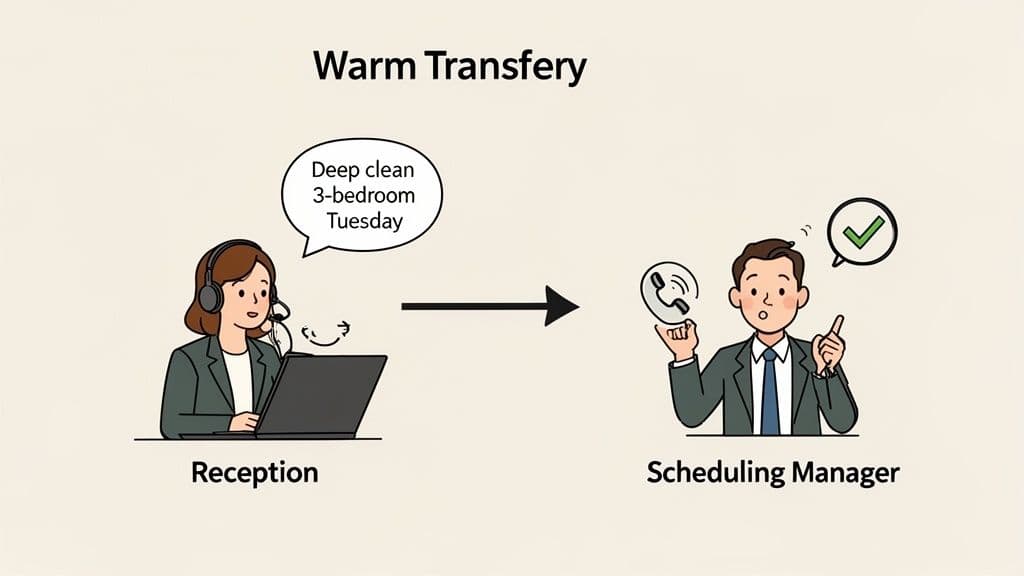
Imagine a new customer, Maria, calls your cleaning company to book her first cleaning. Your receptionist answers the phone with a friendly "hello" and gets her basic info.
Instead of just sending the call over, the receptionist says, "Thanks, Maria! Jane, our scheduling manager, can get you set up. Let me get her on the line for you—one moment."
While Maria waits on hold, the receptionist calls Jane. "Hey Jane, I have a new client, Maria, on the line. She wants to book a deep clean for her three-bedroom house next Tuesday. Can you help with that?"
Jane says yes. Then, the calls are joined. Maria is greeted with, "Hi Maria, this is Jane. I hear you're looking to get a deep clean for next Tuesday. I can help with that!" Just like that, Maria is talking to the right person and did not have to repeat a thing. It feels personal and easy.
A Modern Way with an AI Helper
Now let's imagine a call comes into a busy electrical company about a hard panel upgrade. This time, a smart AI receptionist answers the call.
The AI greets the caller and asks a few key questions to find out what they need. After getting the main details, it puts the customer on a quick hold.
But instead of making another phone call, the AI sends a text to the main electrician: "New Lead: John Smith needs a price for a 200-amp panel upgrade at 456 Oak Ave. Ready for a call?"
The electrician sees the text and replies "yes." The AI then connects the call. The electrician can greet the customer by name, already knowing all about the project.
That quick, helpful moment is the key to a warm transfer. It is all about making sure the right person is ready to help and the customer feels important from the start.
This smooth handoff does more than just connect two people. It shows that your business is organized and professional. That is how you turn a simple phone call into a great first impression.
How to Get Started with Warm Transfers
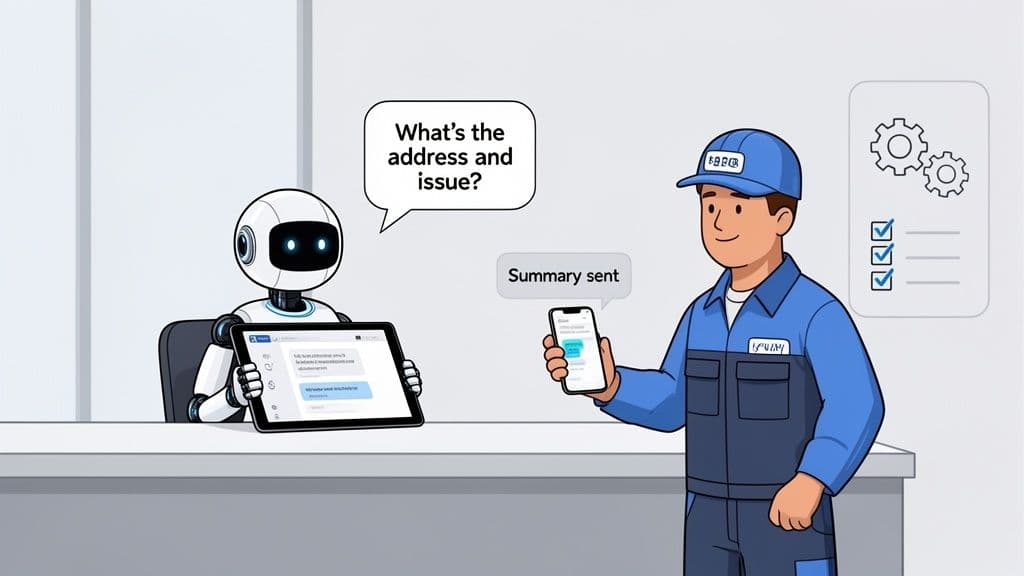
Setting up a warm transfer system is easier than you might think. You just need a call handling service that does the work for whoever answers your phone.
The most common tool is a modern phone system, often called VoIP (Voice over Internet Protocol). These systems are made for businesses and almost always have a transfer button. If you need a new phone system, this guide to VoIP solutions for small business is a great place to start.
But for busy workers who are always on the go, an AI receptionist is the real game-changer. This type of tool brings the idea of a warm transfer to life without you having to do anything.
Make It Easy with an AI Receptionist
An AI receptionist can do the whole warm transfer for you. This makes sure you have a professional handoff every single time. It acts as the perfect front desk, so you never miss a call.
Here’s a quick look at how it works:
- Answers the Call: The AI answers with a natural-sounding voice and asks the caller how it can help.
- Gathers Key Info: It gets important details like the caller's name, why they are calling, and where they are.
- Sends You the Info: You or a tech will get a text message with a short summary of the call.
- Connects the Call: If you say yes, the AI connects the caller to you. They are now talking to someone who already knows what they need.
This simple, automatic process gives you all the good things about a warm transfer system without any of the hard work. It turns your phone into a great tool for getting leads and making customers happy.
For this system to work well, the first greeting must sound good. A great script is the first step. Our guide on how to create the perfect business phone greeting has some good examples to help you start.
A warm transfer might add a few seconds to the start of a call. But it saves a lot of time in the long run because no one has to repeat themselves. It’s a smart, low-cost way for any small business to look like a big one.
Answering Your Questions About Warm Transfers
If you own a small business, you may have some questions about warm transfers. Let's go over a few of the most common ones I hear.
Don't Warm Transfers Just Waste Time?
That is a good question when you are always busy. And yes, a warm transfer adds about 30 seconds to the start of a call. But that small bit of time up front saves you—and your customer—a lot of time later.
Think about it: that quick handoff means the customer does not have to tell their story all over again. It helps you skip the back-and-forth that wastes your day. This helps you solve their problem on the first call.
Isn't a System Like This Expensive?
It used to be. In the past, getting a pro phone system with features like warm transfers cost a lot of money. But new tools like AI receptionists have made it cheap enough for any business.
For the cost of a few cups of coffee a day, you can get a 24/7 system that answers calls like a pro, finds good leads, and does perfect warm transfers every time.
A system like this often pays for itself the first time it helps you get a big job you might have missed.
When Is a Warm Transfer the Right Call?
So, when should you use a warm transfer instead of just taking a message? It comes down to two things: how urgent it is and how much the job is worth. A warm handoff is best when the call is very important.
Here are the best times for a warm transfer:
- Urgent Jobs: A customer with a burst pipe or no power needs help right away. They can't wait for you to call them back.
- Big Jobs: Someone is calling for a price on a new roof or a whole kitchen remodel. Getting them to the right person fast can help you win that big project.
- Hard Problems: If a customer has a tricky problem, a direct handoff to the right expert is the fastest way to find a solution.
Ready to Never Miss a Call?
7 days. Cancel anytime.
Let Cira answer your calls and book jobs while you work.